Florida’s Tree Masters gets this question a lot. Someone’s got a massive oak or pine towering over their house, and they want to know what it’s going to cost before they call. That’s fair. We’ll give you a straight answer, not a runaround.
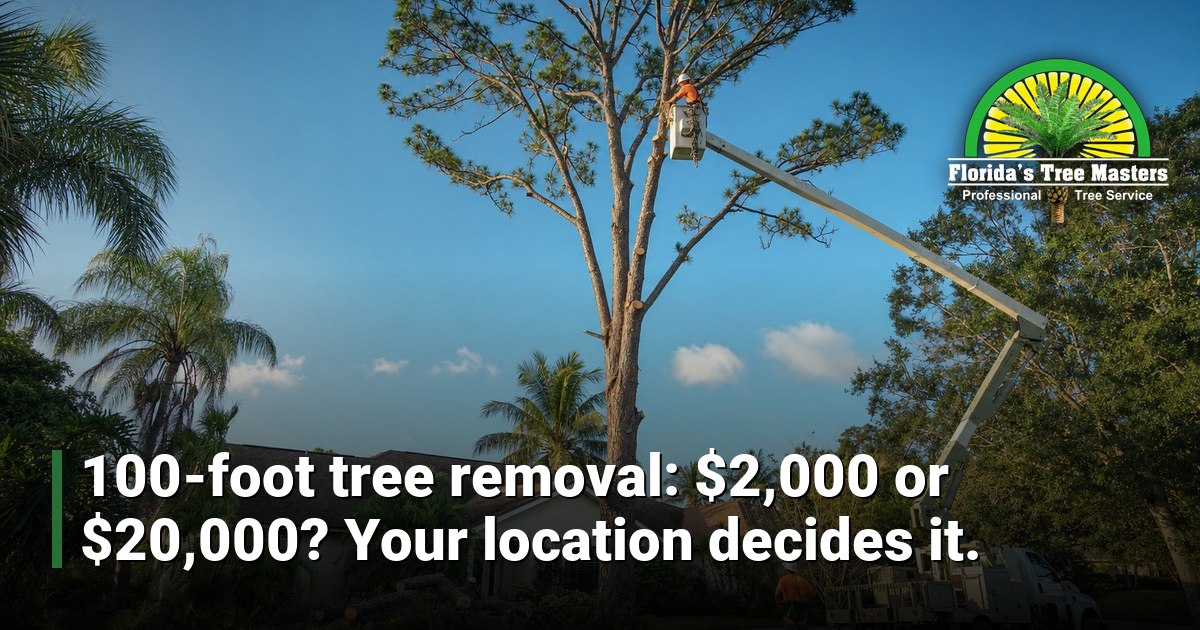
A 100-foot tree is a big job. No way around it. At that height, you’re looking at a full crew, a bucket truck, rigging, and sometimes a crane depending on where the tree sits. The cost to cut a 100 foot tree in our service area can run well into the thousands of dollars, and the final number depends on a handful of factors we’ll walk through below.
Every tree is different. Final price depends on size, location, access, and disposal. That’s not a dodge, it’s just how tree work goes. The only way to know your exact number is to have someone come look at it. We do that for free.
Table of Contents
ToggleWhy a 100-Foot Tree Costs What It Does
Height alone doesn’t set the price. It’s everything that comes with the height. A 100-foot pine in an open backyard is a different job than a 100-foot water oak leaning over a roof with a fence on one side and a pool on the other.
Here’s what our crew is thinking about when we quote a tall tree:
- Access for equipment. Our bucket truck needs a clear path. If we can’t get it close, we’re climbing and rigging by hand. That takes longer and costs more.
- What’s underneath the tree. A tree over open grass is simple. A tree over a roof, a fence, a septic tank, or a parked car requires slow, controlled cuts and careful rigging to bring pieces down safely.
- The condition of the tree. A storm-damaged tree with a cracked trunk or rotted core is unpredictable. Dead wood doesn’t fall where you want it to. That changes how we approach the job.
- Species. Live oaks are dense and heavy. A 100-foot live oak produces a lot more wood than a 100-foot slash pine. More wood means more time hauling and chipping.
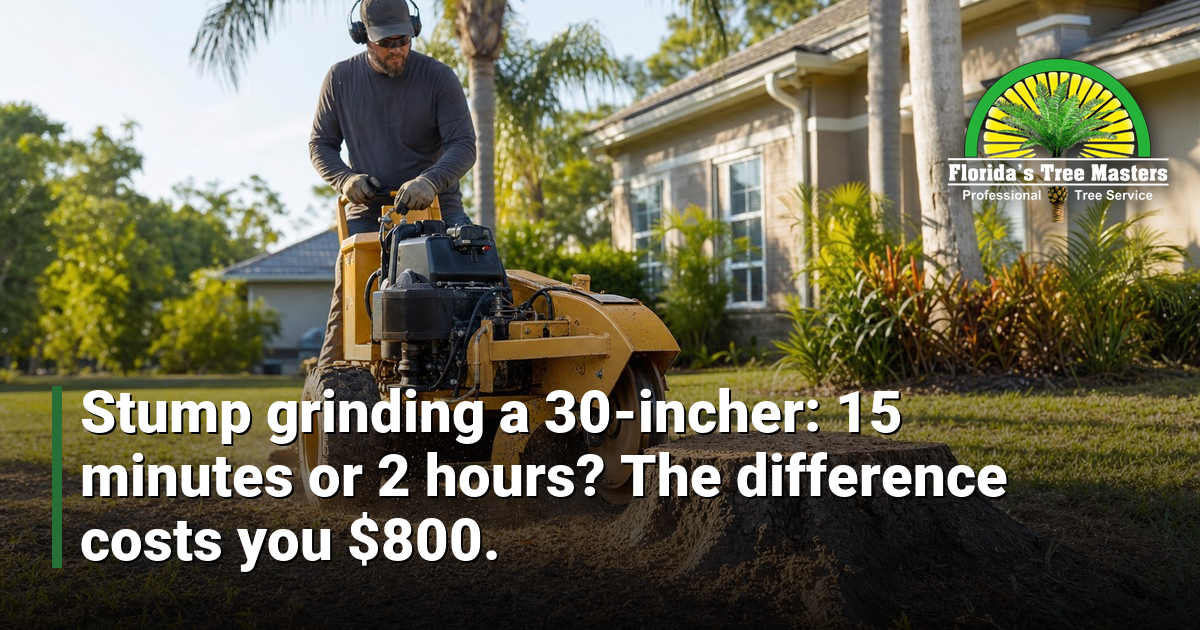
- Stump removal. Cutting the tree down and grinding the stump are two separate services. If you want the stump gone, that’s an add-on. Our Vermeer stump grinder handles most stumps quickly, but it’s priced separately.
What’s Included in Our Tree Removal Price
Some outfits quote you a low number and then charge extra to haul the wood away. That burns people. When we quote a tree removal, cleanup is included. Our crew loads the debris, chips the brush, and hauls everything off. You shouldn’t have to rent a dumpster after we leave.
We’re licensed and insured. If something goes sideways, it rarely does, but trees are trees, you’re not holding the bag. That matters with a 100-foot tree. A lot can go wrong with that much wood in the air.
Our guys are ISA-trained. That means they know how to read a tree before the first cut. Lean, root spread, trunk condition, weight distribution, all of it gets assessed before a chainsaw starts. For a tree this size, that assessment isn’t optional.
Common 100-Foot Trees We See Around Here
In northeast Florida, most 100-foot trees fall into a few categories. Here’s how they tend to differ as jobs:
Loblolly and Slash Pine
Pines grow fast in Florida’s sandy soil. A mature loblolly can hit 100 feet without much trouble. They’re tall, but lighter than hardwoods. If access is good, pine removals at this height tend to run on the lower end of the range. The challenge is usually dead limbs. Pine beetles, drought stress, or root damage can leave a lot of loose wood up top that has to come down carefully.
Live Oak and Water Oak
These are heavier, denser trees. A 100-foot live oak is a serious undertaking. The canopy can spread very wide, which means a lot of material to cut, lower, and chip. Water oaks rot from the inside. We’ve pulled down plenty that looked fine on the outside and were hollow halfway up. That makes them more dangerous and the job more involved.
Laurel Oak
Similar story to water oak. Laurels are common in Volusia, St. Johns, and Clay counties. They grow fast and fail fast. If yours is getting very tall and showing signs of stress, leaf drop, crown dieback, fungal growth at the base, it’s worth having us take a look before the next storm makes the decision for you.
When a 100-Foot Tree Becomes an Emergency
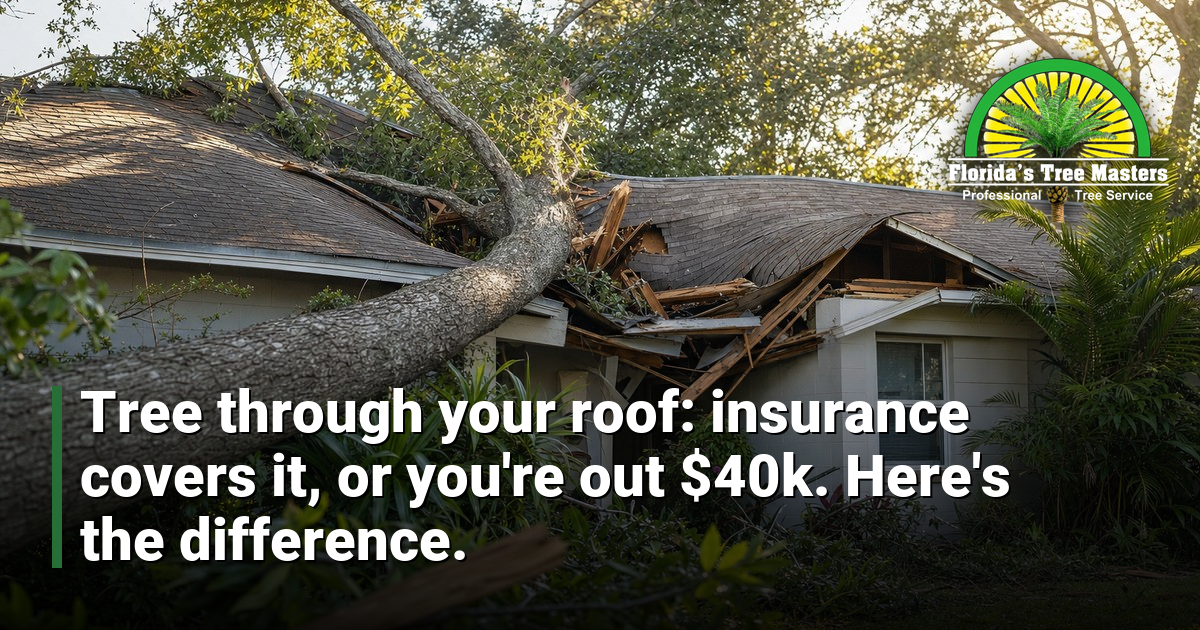
Storm season in Florida runs June 1 through November 30. A healthy 100-foot tree is a liability if it’s too close to your house. If it’s already damaged, split trunk, uprooted on one side, big limbs cracked and hanging, that’s not a situation to sit on.
A cracked trunk can fall without warning. If a limb is over your roof or your neighbor’s, don’t wait to schedule something for next month. We handle storm-damage and emergency tree work for situations like this, so call us right away.
We’re based in Port Orange and serve all eight counties: Volusia, Flagler, Seminole, Orange, St. Johns, Duval, Clay, and Putnam. If your tree came down and it’s blocking a car or touching the house, call us.
Emergency work is priced differently than a scheduled job. We’ll be upfront about that. But for a dangerous situation, speed and safety matter more than getting the lowest quote.
How to Get an Accurate Quote on Your Tree
There’s no reliable way to quote a 100 foot tree removal cost over the phone. Anyone who gives you a firm number without seeing the tree is guessing. We’ll come out, walk the property, look at the tree and what’s around it, and give you a real number, no obligation.
When we come out, here’s what we’re looking at:
- Height and trunk diameter
- Species and overall health
- Distance to structures, utilities, and fences
- Equipment access, can our bucket truck or Bobcat skid steer get in?
- Whether you want the stump ground or left
- Debris disposal, full haul-off versus leaving the wood if you want firewood
You get a clear quote. No surprise charges after the fact.
People searching for tall tree removal near me or trying to figure out the large tree removal cost florida homeowners are paying right now, we’re the crew to call. The tree removal cost florida varies by county and by job, and we handle big-tree removals across Volusia County and the surrounding area. If you’re looking at tree removal volusia county or anywhere in our eight-county service area and want to know How much to cut a 100 ft tree?, call us at 386-320-3169. We’ll come out, take a look, and give you a free quote. We know what these jobs take, and we’ll give you a straight answer.