I see the issue. The keyword `Is it cheaper to trim or cut down a tree?` includes the question mark and capital I, so it needs to appear exactly that way. It’s already present in the “How We Figure Out Which Way to Go” section as `is it cheaper to trim or cut down a tree` but without the capital I and question mark. Here is the full corrected body with that fixed:
Florida’s Tree Masters gets this question a lot, usually from a homeowner standing in their yard staring at a big oak or a leaning pine, trying to figure out which way to go. The short answer: trimming is almost always cheaper upfront. But “cheaper” doesn’t always mean the right call. Sometimes the tree you’re trying to save is already a liability, and a trim job just delays the inevitable, adding to your total cost in the long run. Let us walk you through how we think about this so you can make a smart call before you spend a dime.
Table of Contents
ToggleWhat Trimming Costs vs. What Removal Costs
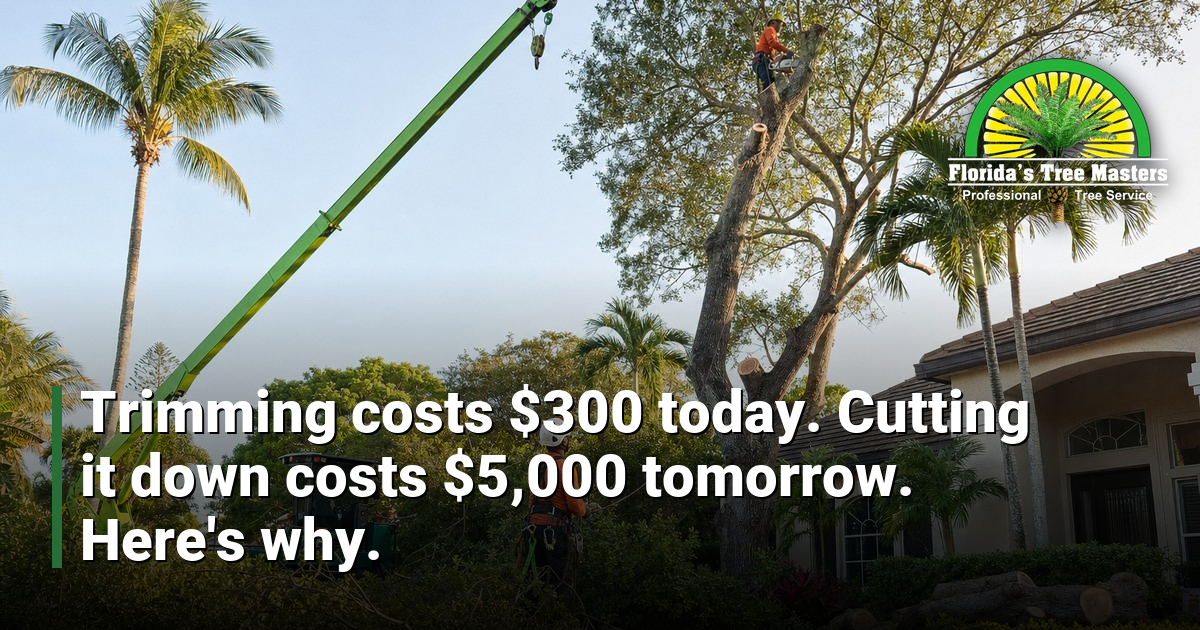
If you’re asking yourself, is it cheaper to trim or remove a tree, the honest answer is: trimming wins on price almost every time, until it doesn’t. Tree trimming cost northeast florida typically runs between $200 and $800 for a standard residential job. That covers pruning dead limbs, shaping the canopy, and cleaning up debris. A large oak with high branches or one hanging over a structure will push that number up. Access matters too. If our bucket truck can’t get close, the work takes longer.
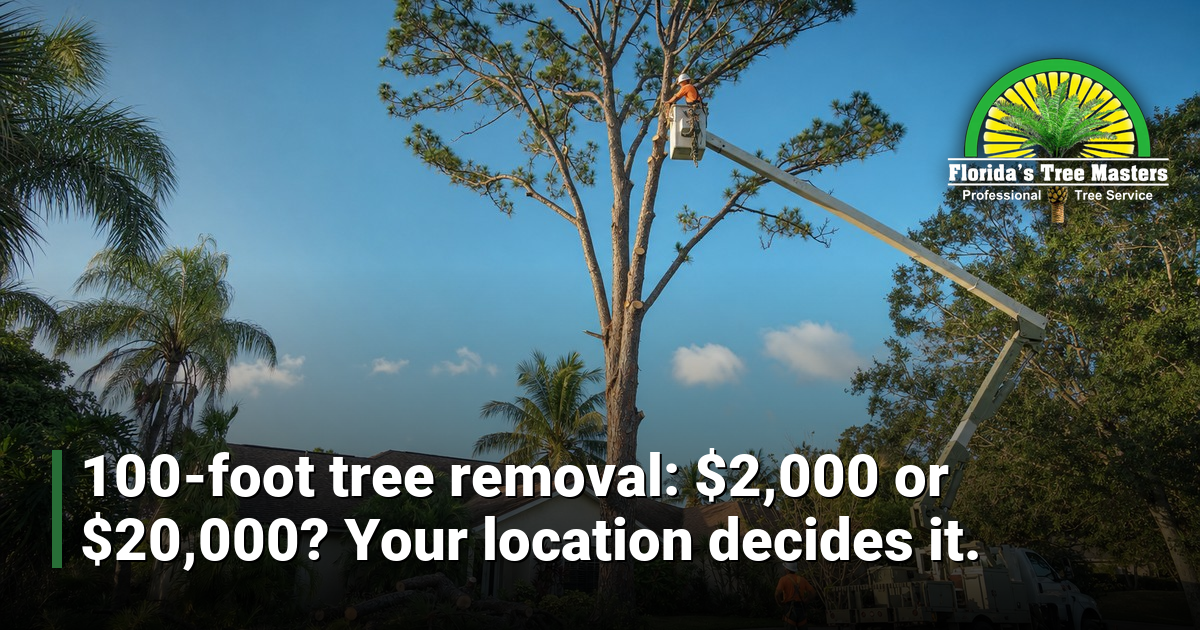
Removal is a bigger job and costs more. For a clearer picture of tree trimming vs removal cost, consider this: most removals in our service area fall between $400 and $2,500, depending on size, location, and how complicated the takedown is. A straight pine in an open backyard sits on the low end. A 70-foot water oak wedged between your house and a fence with power lines nearby sits on the high end. Stump grinding is a separate line item, figure another $100 to $400 depending on stump diameter.
Every tree is different. Final price depends on size, location, access, and disposal. That’s why we always come out and look before we quote anything.
When Trimming Is the Right Move
If the tree is healthy and the issue is just overgrowth, trimming makes sense. A well-trimmed tree is also a safer tree. Reducing the canopy cuts wind resistance during storm season, and we have enough of that here in Volusia, Flagler, and the surrounding counties from June through November.
Trimming also keeps trees from creeping into your roofline, gutters, or power lines. If limbs are rubbing your shingles or dropping debris into the AC unit, a good trim solves that without losing the tree entirely. Live oaks especially respond well to proper pruning. They can live for generations if you maintain them right.
Signs a Trim Is Enough
- The trunk is solid, no soft spots, cracks, or visible rot
- The root zone looks normal, no heaving soil, no mushrooms at the base
- The lean, if any, hasn’t changed recently
- The main issue is just long limbs or a crowded canopy
- The tree came through the last hurricane season without major damage
If most of those are true, we’ll tell you a trim is all you need. Our crew isn’t here to sell you a removal when a trim does the job.
When Removal Is the Smarter Investment
Some trees look like a trim job on the surface but are finished. Trimming a dying tree doesn’t fix what’s wrong underneath. It just makes the yard look cleaner while the problem gets worse.
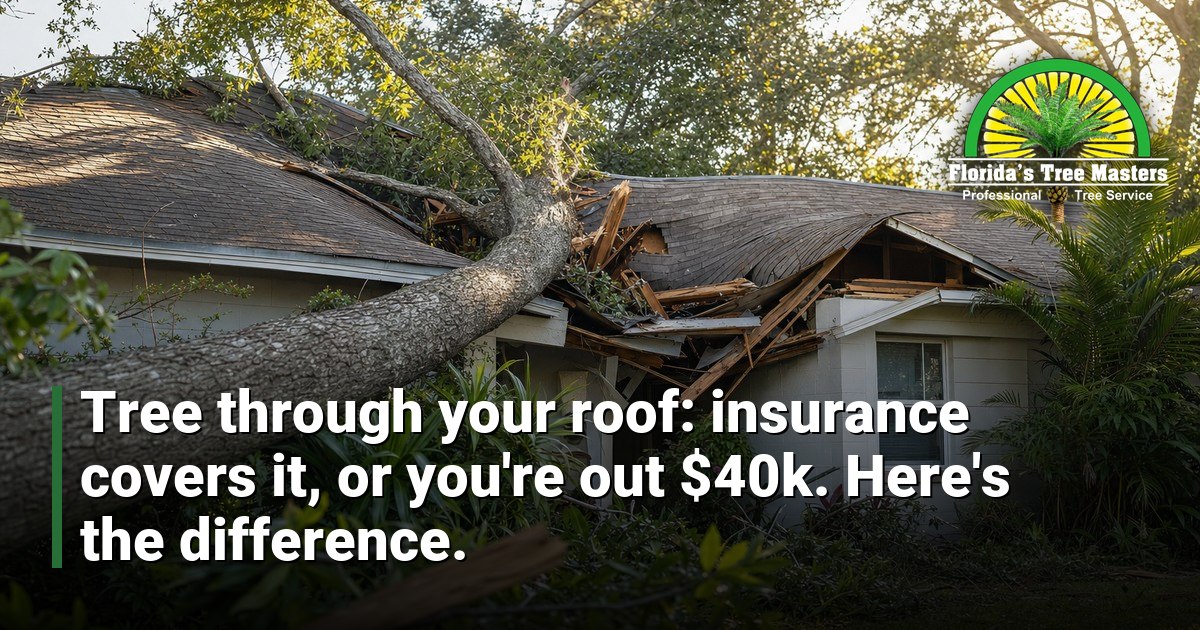
We see this a lot with water oaks. They decline fast in Florida’s sandy soil and humid conditions. By the time the canopy looks thin and the bark starts peeling, the inside of the trunk is often already compromised. Trimming that tree might cost you $400. Removing it after it falls on your roof costs far more, and that’s before you talk to your insurance company.
Laurel oaks are the same story. They grow fast, they look fine, and then they fail. A cracked trunk can go down without warning. If a tree like that is within striking distance of your house, your car, or anywhere people walk, don’t wait.
Signs the Tree Needs to Come Down
- Trunk has cracks, splits, or large cavities
- The bark is soft or spongy to the touch
- Mushrooms or fungal growth at the base
- More than 50% of the canopy is dead or dying
- The tree is leaning toward a structure and that lean has gotten worse
- Root heaving, soil lifting around the base of the tree
- The tree took significant storm damage and the main leader is gone
If you’re seeing two or more of those signs, call us. We’ll come out, take a look, and tell you straight what we think. If the tree can be saved with a trim, we’ll say so.
The Hidden Cost of Waiting
A tree that needs to come down doesn’t get cheaper the longer it stands. It gets more dangerous and, in some cases, harder to remove. A dead tree still standing is easier to work with than one that’s rotted from the inside and unpredictable when it falls. Our crew can control a removal. We can’t always control where a failing tree lands.
Storm season makes this worse. A limb that’s hanging on by a thread in May can come through a window in September. If that limb is over your roof right now, don’t wait for a storm to make the decision for you. We run a 24/7 emergency line, but emergency work after a storm costs more and takes longer. Crews are stretched, demand spikes, and the whole county is calling at once. Getting ahead of it is almost always the cheaper path.
We’ve been doing this work since 2018 across Volusia County and the surrounding area. We’ve seen what happens when a marginal tree gets one more pass with the pruning saw instead of a removal. Sometimes it’s fine. Sometimes it ends up in the living room. Our ISA-trained crew knows the difference, and we’ll tell you honestly which side of the line your tree is on.
How We Figure Out Which Way to Go
Homeowners ask us all the time: Is it cheaper to trim or cut down a tree? Honestly, it depends on the tree, and that’s not a dodge. When we come out for a free quote, we’re not just looking at what you can see from the ground. We’re looking at species, age, soil conditions, proximity to structures, recent storm history, and overall health. That gives us what we need to make a real recommendation, not just the option that makes us more money.
Our trucks carry the gear for both jobs. Bucket truck for elevated trimming work. Bobcat skid steer and our Vermeer stump grinder for removal and cleanup. If the job calls for a trim, we’ll trim it right. No topping, ever. Topping stresses the tree, creates weak regrowth, and usually leads to a removal down the road anyway. It’s a shortcut that costs you more in the long run.
If the job calls for removal, we’ll take it down clean, grind the stump if you want it gone, and haul off the debris. The yard looks like the tree was never there. That’s the standard on every job, whether it’s a tree removal in Clay County or a trim in St. Johns.
The tree removal cost florida homeowners actually pay varies by size, access, species, and what’s around the tree. We don’t quote flat rates because a quote without seeing the tree isn’t worth much. What we can promise is a straight answer and a fair number once we’ve had a look.
Understanding when to remove a tree isn’t always obvious from the yard, and that’s exactly why we come out first. For tree service volusia county and beyond, call us at (386) 320-3169 to set up a free quote. We serve Volusia, Flagler, Seminole, Orange, St. Johns, Duval, Clay, and Putnam counties. We’ll look at the tree and tell you exactly what makes sense. Trim, remove, or somewhere in between. No runaround, no pressure, just a real answer from people who do this every day.