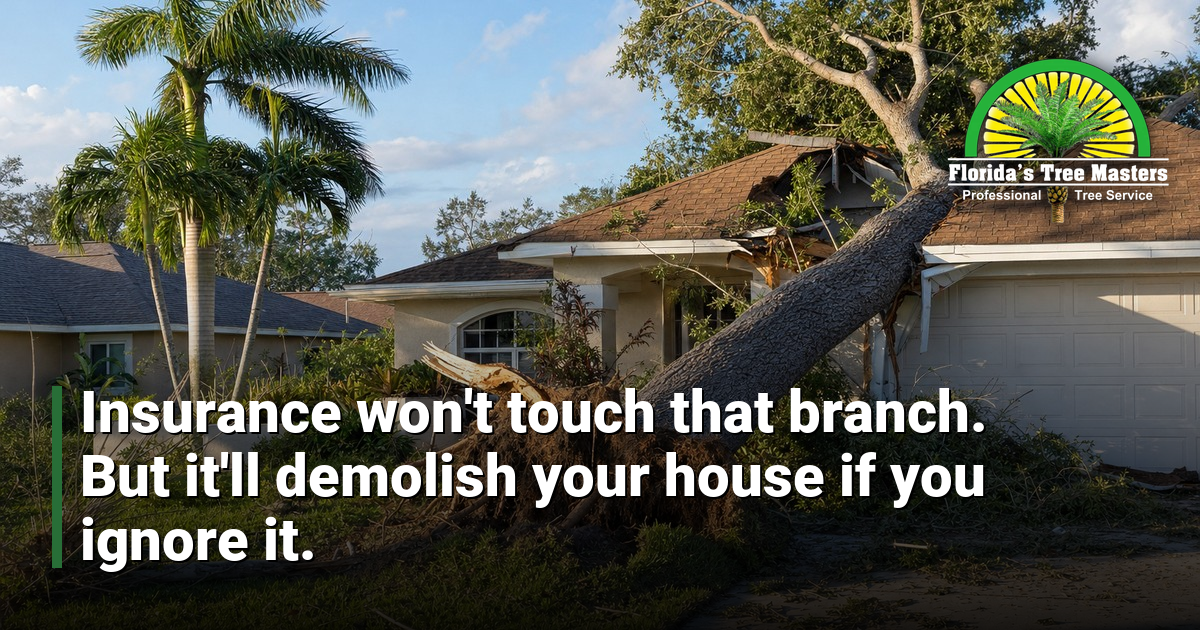
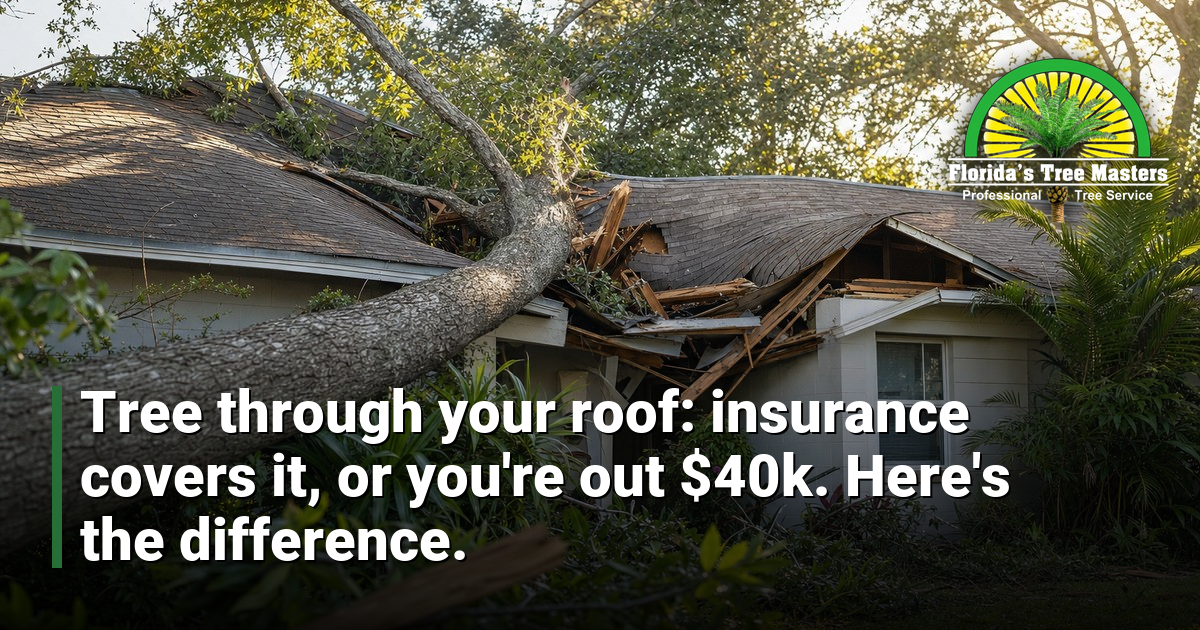
Florida’s Tree Masters gets calls like this every storm season. A tree just came down on your roof, your heart is pounding, and you’re asking yourself, “What should I do if a tree fell on my house?” Take a breath. We’ve handled this exact situation many times across Volusia, Flagler, St. Johns, Duval, and every county in our service area. This guide walks you through exactly what to do, in order, so you don’t make a bad situation worse.
Table of Contents
ToggleStep One: Get Everyone Out of the House
This is not optional. If a tree fell on your house, the structure may be compromised. Roofs, walls, and ceilings can fail without warning, even hours after impact. Get every person and every pet out immediately. Don’t grab valuables. Don’t stop to take photos first. Get out, then figure out the rest from a safe distance.
Once you’re outside, stay away from downed power lines. If a line is on the ground or draped over the tree, treat it as live until the utility company says otherwise. Don’t touch it. Don’t walk near it. Call 911 if there’s any immediate danger, fire, a sparking line, or anyone hurt.
Only after everyone is safe should you start making calls. That includes calling us.
Step Two: Call a Tree Service Before You Call Your Adjuster
A lot of homeowners do this backwards. They call their insurance company first, then wait for an adjuster, all while the tree is still sitting on the roof. Rain gets in. The ceiling starts to sag. More damage piles up.
Call a licensed tree service first. We can get the tree off the structure and document everything before conditions get worse. Call us at (386) 320-3169. If you’re searching for emergency tree service northeast florida and a tree is on your house right now, call us before you do anything else.
We’re licensed and insured, and your adjuster will want that information anyway, so working with a licensed crew protects you twice. Once from more damage, and once from any dispute about who did what to the structure.
Step Three: Document Everything Before Cleanup Starts
Once you’ve made the safety calls and a tree crew is on the way, take photos. Lots of them. Walk the perimeter if it’s safe to do so. Photograph the tree, where it fell from, how it’s resting on the structure, and any visible damage to the roof, walls, gutters, and windows.
Photos from multiple angles before we start cutting help your insurance claim. Most carriers want to see the tree in place, not already sectioned on the ground. Our crew will communicate with you before any cuts are made so you have time to document.
Don’t try to move the tree yourself. Don’t climb on the roof. Don’t use a chainsaw if you’ve never run one in a situation like this. A tree on a roof is under tension and load. It can shift fast when cut incorrectly. That’s how people get hurt.
What Happens When Our Crew Arrives
We show up with the right equipment for the job. Depending on the size of the tree and access to your property, that might mean our bucket truck, our Bobcat skid steer, chainsaws, and rigging gear. A big pine on a ridge line is a different job than a water oak across a back porch. We assess first, then cut.
How We Approach a Tree on a Structure
tree on roof what to do is the first thing people search after the shock wears off. The answer starts here: remove the weight without causing more structural damage. We work top-down, cutting and lowering sections in a controlled way rather than slicing through the trunk and letting pieces fall. Your roof has already taken a hit. We’re not going to add to it.
Once the tree is off the structure, we’ll help you assess what’s exposed. Tarping an open roof section is a temporary measure, not a permanent fix, but it keeps water out until a roofer can get there.
Stump and Cleanup
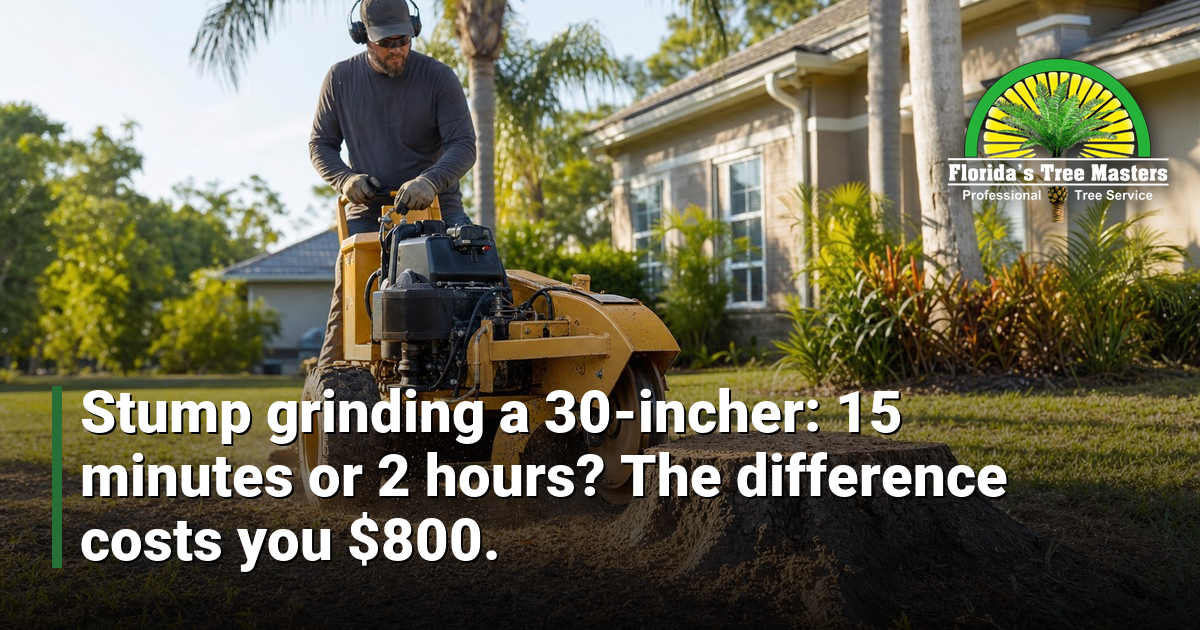
After the tree is removed, you’ve still got a stump and a pile of debris. We bring our Vermeer stump grinder for stump removal and handle debris haul-off. We don’t leave a mess on your property. The job isn’t done until the yard is clean. Learn more about our tree removal process if you want to know what’s included.
What About the Insurance Claim?
We’re not insurance adjusters, so we won’t tell you what your policy covers. But delayed cleanup can make claims harder to settle. Secondary damage, water intrusion, mold, ceiling collapse, all of it can complicate things. Acting fast with a licensed crew protects you.
A few things that help your tree fell on house insurance claim go smoother:
- Photos of the tree in place before removal
- Photos of the stump and root system so the adjuster can see the tree’s condition
- A written invoice from a licensed, insured company (that’s us)
- Any documentation about the tree’s history, if it was known to be dead, diseased, or leaning
Your homeowner’s insurance typically covers removal of the tree from the structure and repair of the structure itself. Whether it covers full stump removal or debris cleanup from the yard varies by policy. Ask your adjuster specifically about that.
Why Trees Fall on Houses in Florida
Most of the calls we get aren’t random. There are patterns. Sandy soil in northeast Florida doesn’t hold roots the way clay soil does up north. A tree that looks perfectly healthy can tip over in a tropical storm because the roots never had a solid anchor. This is common in Volusia and Clay counties after heavy rain.
Dead wood is the other big one. A lot of Florida homeowners have water oaks, laurel oaks, or pines with significant internal rot. From the ground, they look fine. But the trunk is hollow, or the main scaffold branches are decayed. One good gust and they go.
If you’re in Volusia County or anywhere in our service area and you’ve got a tree you’re not sure about, one that’s leaning, dropping large branches, or has soft spots in the bark, call us before the storm hits. We’ll come out, take a look, and give you a free quote. That conversation costs you nothing. A tree on your roof costs a lot more.
Florida storm season runs June 1 through November 30. The time to deal with a suspicious tree is before the wind picks up, not after.
Get the Tree Off Your Roof. Call Us Now.
If a tree fell on your house and you need emergency tree removal florida, stop reading and call (386) 320-3169. Our crew is based in Port Orange and we serve Volusia, Flagler, Seminole, Orange, St. Johns, Duval, Clay, and Putnam counties. We’re licensed, insured, and ISA-trained. We’ll get there, get the tree off, and leave the property clean.
For storm tree removal volusia county and the surrounding area, we handle everything from trees that came down and missed the house to large limbs hanging and ready to drop. Don’t wait on it. A cracked limb over a roof is a problem now, not later. Give us a call and we’ll come take a look. Free quote, no pressure.