Florida’s Tree Masters gets this question a lot, usually right after a storm, when someone is standing in their yard staring at a tree on their roof and wondering who’s going to pay for all of it. “Does insurance cover emergency tree removal?” That’s the question, and the short answer is: it depends on your policy and where the tree landed. The longer answer is what we’ll walk you through here, because the difference between a covered claim and an out-of-pocket bill can be thousands of dollars.
Table of Contents
ToggleWhat Homeowner’s Insurance Usually Covers
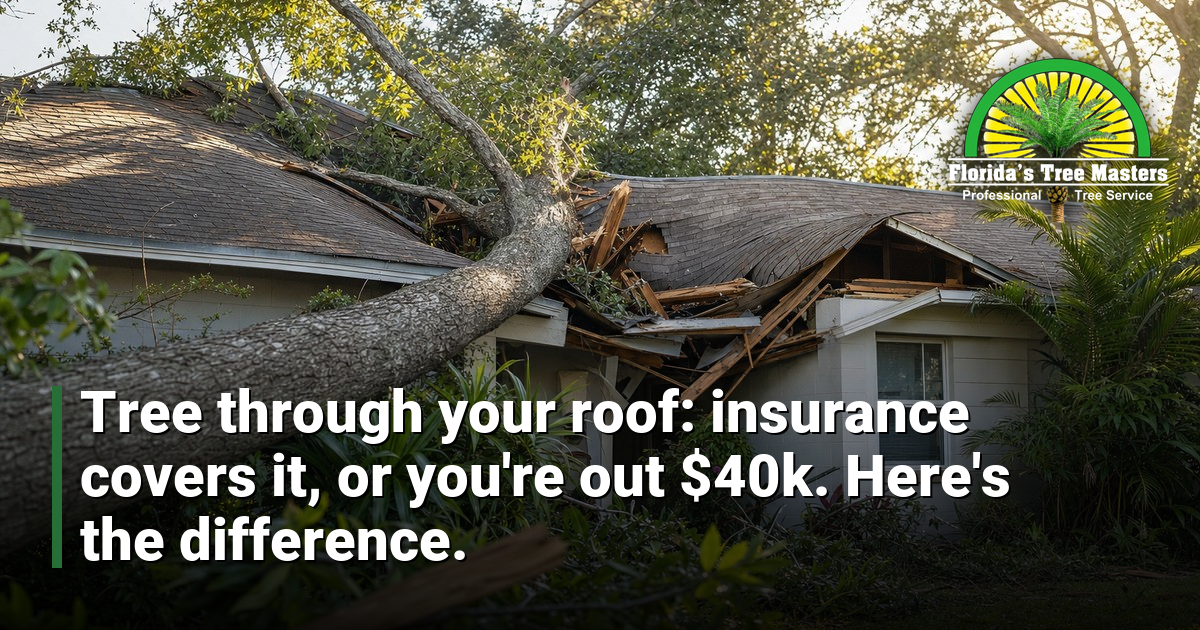
Most standard florida homeowner insurance tree policies cover damage when the tree falls on something insured: your house, your attached garage, your fence, your car (if you have comprehensive auto coverage). That’s the key phrase. It has to fall on something. If a storm knocks a tree into your living room, your insurance should cover the removal and the structural repairs. The storm damage tree removal is covered because it’s part of clearing the damage to the insured structure.
Here’s where it gets specific. Coverage kicks in when the damage is caused by a named peril, things like windstorm, lightning, or hail. In Florida, that usually means a hurricane or a strong tropical system. Storm season runs June 1 through November 30, and we work emergency calls whenever storms hit.
Some policies also cover a portion of tree removal costs even when the tree missed the house, but only if access to the home is blocked. Think of a pine that fell across your driveway and you can’t get in or out. Some carriers will pay something toward removal in that case. Not all. Read your policy, or call your agent before you assume.
What Insurance Usually Does NOT Cover
This is the part nobody wants to hear. If a tree falls in your yard and doesn’t hit anything, just lands on the grass, most policies won’t pay a dime toward removal. That’s your cost. And if it’s a big oak, that cost can climb fast depending on size and access.
Neglect is another big one. Insurance companies can deny a tree removal insurance claim if they determine the tree was already dead, diseased, or visibly leaning before the storm. They’ll argue you should have had it removed. Water oaks in our area go soft in the core faster than most people realize, and a dead one coming down in a storm is sometimes classified as a maintenance issue rather than storm damage.
Healthy trees that fall during a storm with no prior signs of decay are a much cleaner claim. Regular tree inspections matter, not just for safety, but because documentation that a tree was healthy before a storm strengthens your position with the adjuster.
The Claim Process After a Storm
Step 1: Document Everything First
Before anyone starts cutting, take photos and video of everything. The tree, the damage it caused, how it’s positioned, what it hit. Walk around the whole scene. Get close-ups of the trunk, the root ball, and the point of impact on the structure. Don’t move anything until you’ve got solid documentation. Adjusters work from what they can see, and if the tree is already gone by the time they get there, you’re relying on your photos to tell the story.
Step 2: File the Claim Fast
Call your insurance company as soon as the situation is safe. Most carriers have a window they expect you to report within. After a major storm, their lines get slammed, so get in the queue early. Let them know you have an emergency and ask specifically what’s covered and what documentation they need.
Step 3: Get a Professional Written Estimate
Your insurance company will want a written estimate from a licensed tree service. That’s us. We come out, assess the situation, and give you a detailed written quote that documents the work needed, the equipment required, and what cleanup is included. That paperwork matters when you’re working with an adjuster. We work with homeowners in Volusia County and across our 8-county area on storm claims, and we know what adjusters expect to see in an estimate.
How Much Does Emergency Tree Removal Cost Out of Pocket?
So, does insurance cover emergency tree removal in every situation? No. And if it doesn’t cover yours, or you haven’t hit your deductible, you’ll want to know what you’re looking at. Emergency tree removal insurance florida gaps are common, and out-of-pocket costs for most residential jobs typically run between $400 and $2,500. Larger trees, limited access, or trees tangled in structure push the number higher. A big live oak on a roofline with tight equipment access is a different job than a small palm in an open yard.
Every tree is different. Final price depends on size, location, access, and disposal. We don’t give ballpark guesses over the phone. We come out, look at it, and give you a real number. Free, no obligation. If you’ve got an emergency right now, call us at (386) 320-3169.
One thing worth knowing: if insurance is covering the job, your deductible still applies. A $1,000 deductible on a $900 removal means you’re paying out of pocket anyway. We’d rather you know that before you spend time on the paperwork.
When a Tree Fell on Your House: What Happens Next
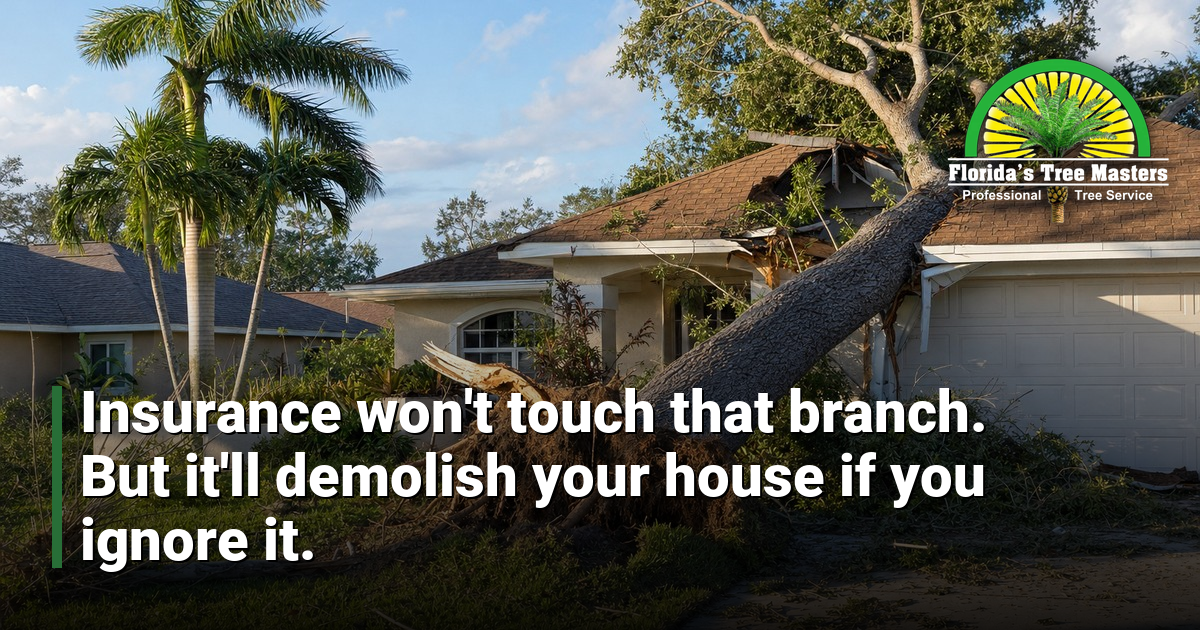
If tree fell on house insurance is what you’re dealing with right now, the steps matter. Don’t let anyone start cutting before you’ve documented the scene. Photos, video, close-ups of the trunk and the point of impact. Once that’s done, call your carrier and get the claim started. Then call us for a written estimate your adjuster can work from. We’ll make sure the estimate gives them everything they need to answer that question.
What to Watch Out for After a Storm
After a big storm, you’ll see trucks in every neighborhood. Some are legitimate, licensed tree services. Some are not. Storm chasers, out-of-state crews who roll in after a hurricane, are a real problem in Florida. They may not be licensed here, they may not carry the right insurance, and once they’re paid, they’re gone. If something goes wrong on your property, you’re left holding it.
Ask to see proof of insurance and a Florida contractor license before anyone picks up a chainsaw on your property. We are licensed and insured, and we’ll put our license number in front of you before we start any job. Our crew is ISA-trained. That matters because untrained cuts on a tree that’s already stressed or partially fallen can cause the whole thing to shift in ways you don’t expect. A cracked trunk can move without warning. You want experienced people making those cuts.
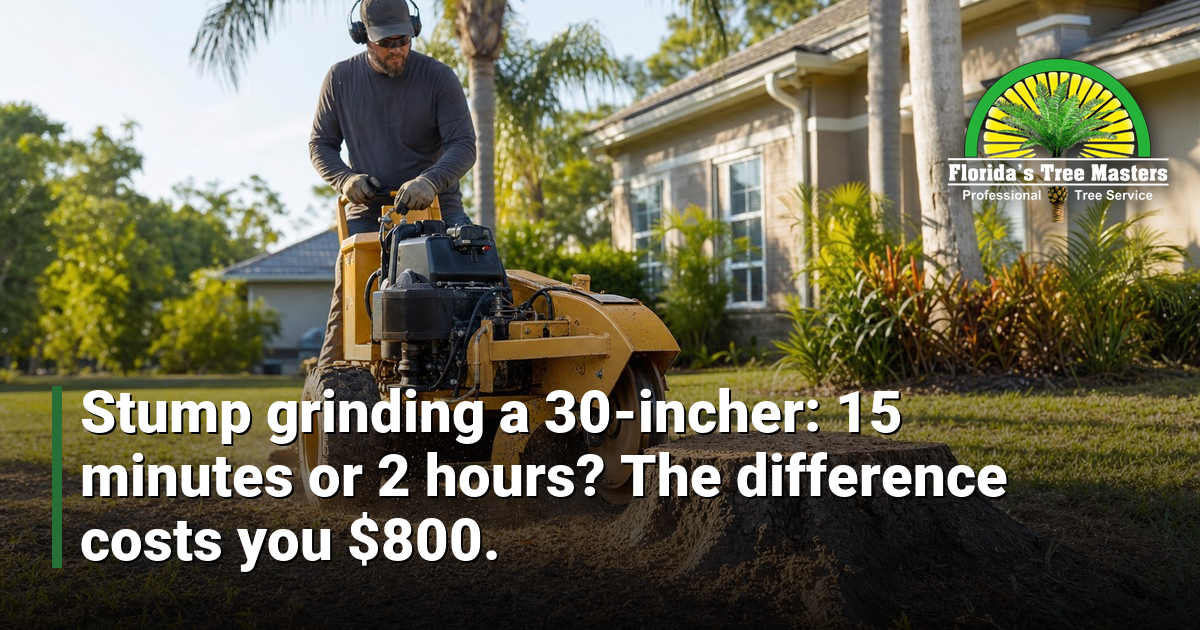
We handle post-storm jobs across Volusia, Flagler, St. Johns, Duval, Clay, Putnam, Seminole, and Orange counties. We bring our bucket truck and Bobcat skid steer when access allows, and our Vermeer stump grinder if the situation calls for it. Cleanup is included. We don’t leave brush and logs in your yard for you to deal with.
Call the Adjuster and Call Us
If a tree came down on your property, do two things. Call your insurance company to start the claim and ask exactly what’s covered under your policy. Then call us for a written estimate you can hand directly to your adjuster. We know how to document the job so the estimate holds up.
If there’s a limb hanging over your roof or a tree leaning against your house right now, don’t wait on the insurance question. Safety comes first. An unstable tree doesn’t wait for business hours. Call (386) 320-3169 and we’ll come out and tell you exactly what you’re dealing with. Free quote, no pressure, real answers.