Florida’s Tree Masters gets calls every week from homeowners who’ve been reading Reddit threads trying to figure out if the tree leaning toward their house is actually dangerous. Honest answer: Reddit can’t tell you that. Some of those threads have solid general advice. A lot of them are people guessing based on a blurry photo. If you search “dangerous tree near house reddit” you’ll find the same back-and-forth. What you need is someone who can walk your property, put hands on the bark, and look up into the canopy. That’s what we do. But before you call anyone, here’s how to read the situation yourself.
Table of Contents
ToggleSigns a Tree Is Actually Dangerous
Not every tree near your house is a hazard. But some of them absolutely are, and the warning signs are usually sitting right in front of you. Our crew has been assessing trees across Volusia County and the surrounding counties since 2018. These are the things we look at first.
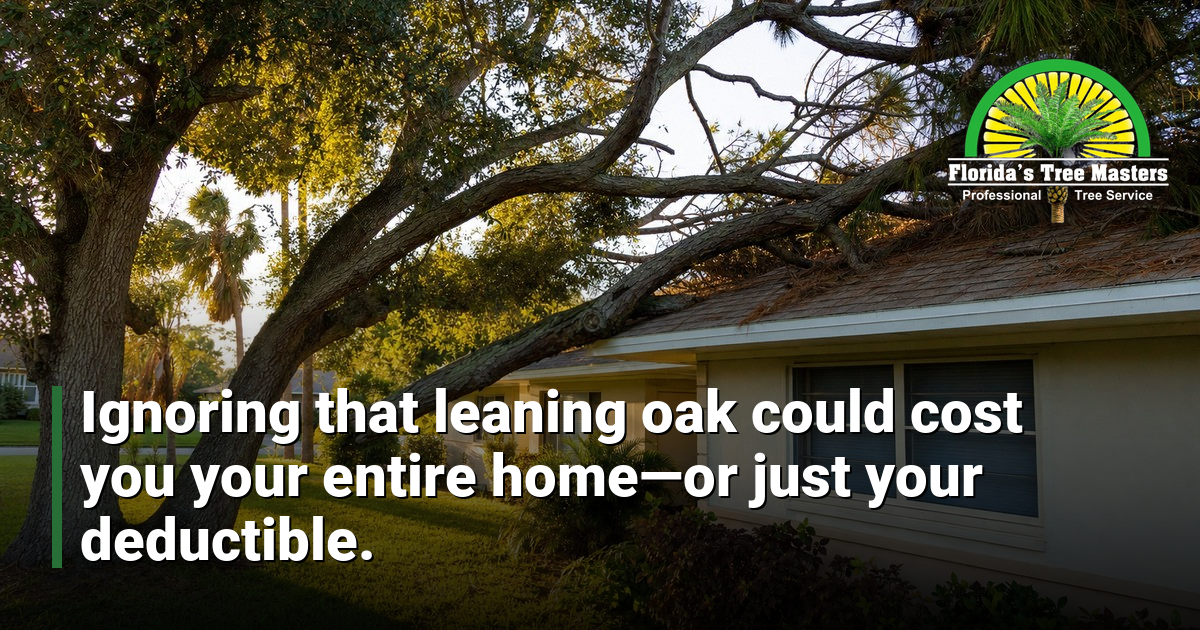
- Lean toward the structure. A slight natural lean is common. A tree leaning toward house or structure, with the root plate lifting on the opposite side, is a different problem entirely.
- Cracks in the trunk. A crack that runs vertically or spirals around the trunk is a serious red flag. A cracked trunk can fail without warning, especially after rain when the wood swells.
- Fungal growth at the base. Mushrooms or conks growing at the root flare mean decay is already inside the tree. That’s not a cosmetic issue. That’s structural failure waiting to happen.
- Dead wood in the canopy. Dead branches over a roof or a fence line don’t need a storm to come down. They can drop on a calm day. We see it all the time in Florida’s heat.
- Roots lifting pavement or soil heaving. In our sandy soil, a tree that’s started lifting its own root plate is already compromised. That’s the anchor loosening before a fall.
- Recent storm damage. Splits, hanging limbs, bark stripped by a past storm, these weaken the tree’s structure in ways that aren’t always obvious from the ground.
If you’re seeing more than one of these signs on the same tree, don’t wait for the next storm to decide what to do. That storm is coming. In Florida, it always is.
Why Florida Trees Fail Differently Than Up North
A lot of the Reddit advice about a dangerous tree near house situations comes from people in Ohio or the Pacific Northwest. Their rules don’t always apply here. Florida grows trees fast and wet. That sounds good, but fast growth in sandy, water-logged soil means shallow root systems. A big water oak that looks perfectly healthy can get pushed over by a tropical storm because the roots never got deep enough to hold it.
We also deal with specific tree types that behave in ways that surprise people who aren’t used to them.
Water Oaks
Water oak removal northeast Florida is some of our most common work, and for good reason. Water oaks are everywhere out here. They grow fast, they get big, and they have a reputation for sudden failure. Internal decay is common in mature water oaks, and you often can’t see it from the outside. A tree that looks full and green can be hollow at the core. Our ISA-trained crew checks for that specifically on every oak assessment.
Slash Pines and Sand Pines
Pines in Florida tend to have a single tap root and not much lateral root spread in sandy soil. When the soil stays saturated after heavy rain, that root system loses its grip. We’ve pulled downed pines off fences and out of living rooms after storms. The lean usually shows up fast once the saturation hits.
Palms
People assume palms are fine because they flex in the wind. Usually that’s true. But a palm with dead boots left on the trunk, or one that hasn’t been trimmed in years, is heavier than it looks. A palm with root rot at the base isn’t flexible, it’s fragile. If your palm has been neglected, we’ll tell you straight whether it needs a trim or a removal.
What the Tree Service Should Actually Do
If you’ve called a tree service and they gave you a quote over the phone without seeing the tree, that’s a problem. There’s no way to properly assess a hazard tree without walking the property. Our crew comes out, looks at the tree from multiple angles, checks the root zone, probes for soft spots in the bark, and looks up. Then we give you our honest read on it.
We don’t upsell removals. If a tree can be saved with a crown reduction or dead wood removal, we’ll tell you that. Tree removal is the right answer when it’s the right answer, not every time. But if a tree is genuinely dangerous to your house or your family, we’ll say so plainly and explain why.
A few things to ask any tree service before you let them on your property:
- Are you licensed and insured? Ask for the documents. Every job we do, we carry full liability and workers’ comp. You should be able to see that paperwork before we start.
- Are any of your crew ISA-certified? That certification means someone on the job has been trained to conduct a formal tree risk assessment. Volusia County properties especially benefit from that training given our soil conditions and storm exposure. We have ISA-trained crew members on staff.
- What’s included in the quote? Our quotes include cleanup. Debris doesn’t get left in your yard. The Bobcat skid steer and chipper come with the job.
How Much Does Removing a Dangerous Tree Cost?
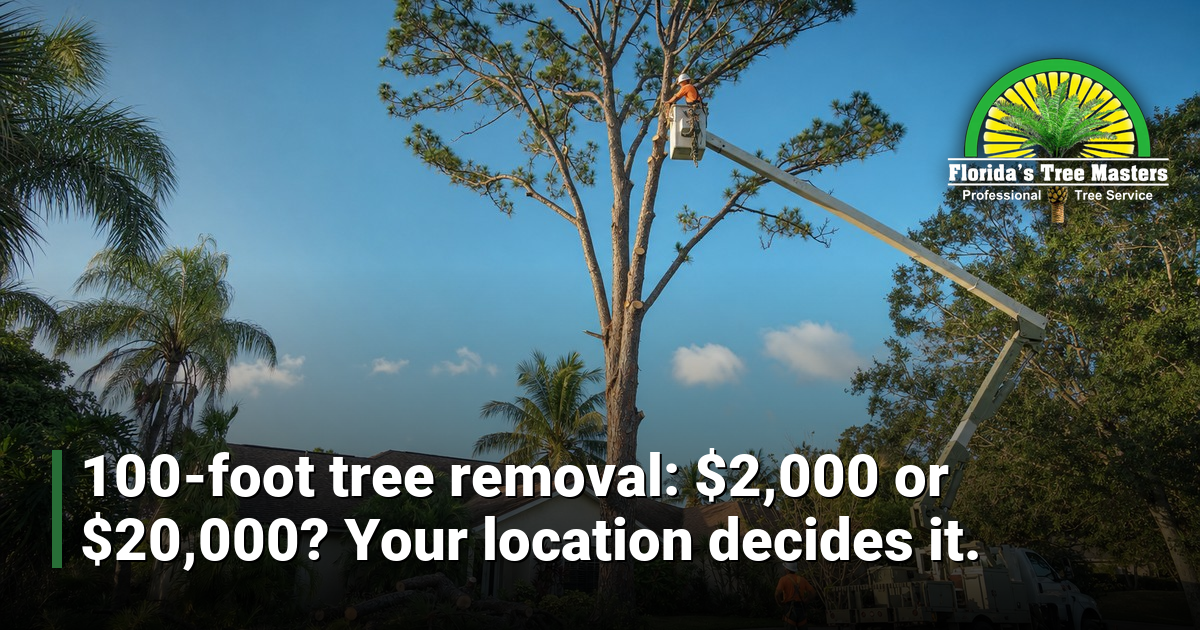
This is one of the most common questions on those Reddit threads, and it gets a wide range of answers because the range is wide. Most tree removal jobs we handle fall somewhere between $400 and $2,500. A large water oak close to the house, requiring the bucket truck and a careful piece-by-piece take-down, is going to run higher. A pine in an open backyard with good equipment access runs lower.
Every tree is different. Final price depends on the size of the tree, how close it is to the structure, what kind of access we have for the Bobcat and our trucks, and whether stump grinding is included. We’ll give you a straight number after we see it, not a guess over the phone.
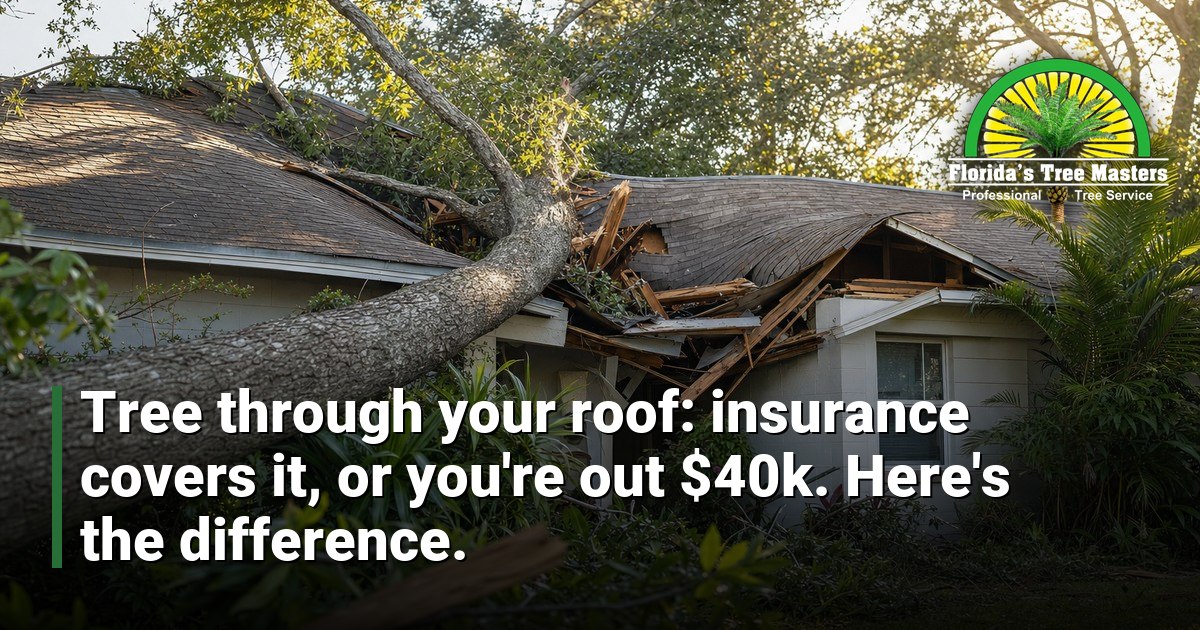
The cost of hazard tree removal Florida homeowners pay us is almost always less than the cost of what happens when a tree falls on its own. A tree on a roof means a tarp, an insurance claim, a contractor, and a lot of headaches. We’ve seen that aftermath more times than we’d like.
If the Tree Is an Immediate Threat, Don’t Wait
If a limb is hanging over your roof right now, or a storm just moved through and something is cracked and leaning, that’s not a situation to sit on while you collect three quotes. Some hazards need to move fast.
We run a 24/7 emergency line for exactly this. Emergency tree removal Florida can’t always wait until Monday morning. Day or night, weekends, holidays, if you’re in Volusia, Flagler, St. Johns, Duval, Clay, Putnam, Seminole, or Orange County and you’ve got a tree that’s an immediate danger, call us. Our crew responds. We’ll bring the equipment we need to make it safe.
Cracked trunk. Hanging limb over a bedroom. Root plate lifting after a storm. These are the calls we take at 2 a.m. and we take them seriously.
If you need a tree risk assessment Volusia County homeowners can count on, we’ll come out, look at it, and give you a free quote. Reddit is fine for general questions, but when a tree is close to your house and you’re not sure if it’s going to make it through storm season, get eyes on it. No pressure, no upsell. Call us at (386) 320-3169 and we’ll take it from there.