Florida’s Tree Masters gets calls about oak trees every single week. Big ones, leaning ones, ones that came down in a storm, ones that are still standing but shouldn’t be. If you’ve got an oak on your property that’s become a problem, this page is going to walk you through what removal actually involves, cost, process, timing, and when to call us before something goes wrong.
Table of Contents
ToggleWhy Oak Removal Is Different From Other Trees
Oaks in northeast Florida are not small trees. A mature live oak can spread 60 to 80 feet wide and weigh tens of thousands of pounds. Water oaks, the ones that drop their leaves in late winter and look half-dead even when they’re not, can rot from the inside out while still looking healthy from the street. Laurel oaks are the same way.
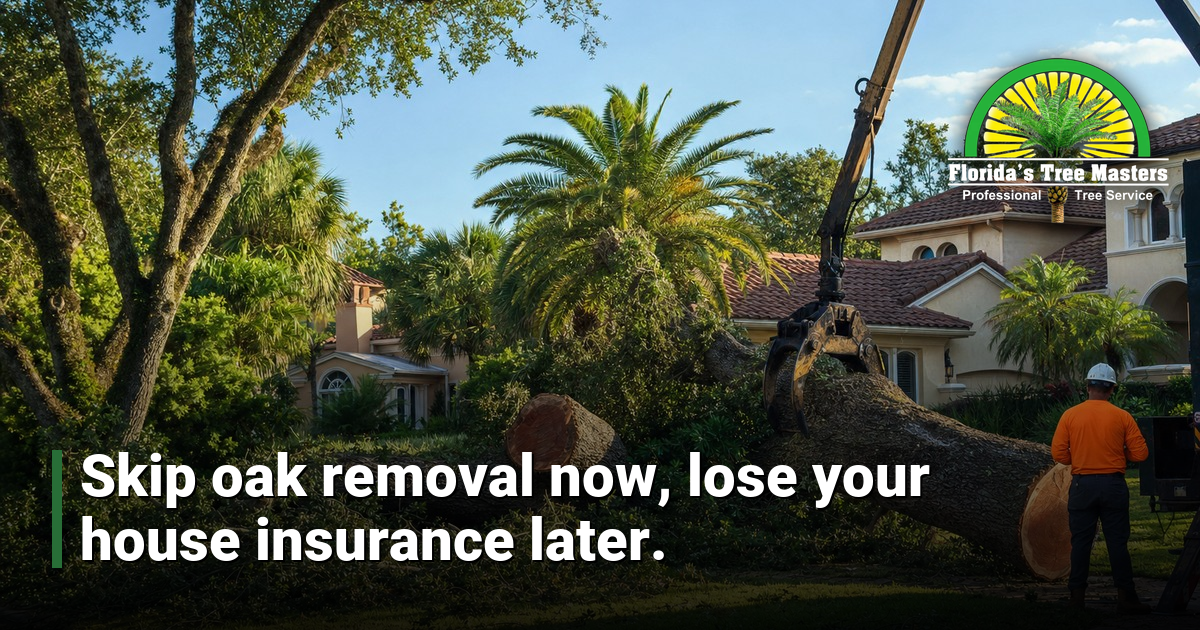
Our crew deals with all three. And each one comes with its own challenges. The size and spread means every removal is a rigging job, not just a chainsaw job. You can’t just cut at the base and let it fall, not near a house, a fence, a power line, or a driveway. Our guys work in sections from the top down, lowering limbs with ropes and rigging blocks so nothing lands where it shouldn’t.
Sandy soil is also a factor. Florida’s soil doesn’t grip root systems the way northern soil does. A tree that looks solid at the trunk can have shallow, compromised roots underneath. That’s one reason why oaks here fail in wind even when they don’t look sick. Storm season runs June through November, and every season we get calls from homeowners who waited one year too long.
Signs Your Oak Needs to Come Down
Not every oak needs to be removed. Some just need a good trim. But some need to come down, and the sooner the better. Here’s what we look for when we assess an oak.
- A cracked or split trunk. A crack that runs vertically or spirals around the trunk is a structural failure waiting to happen. That tree can fall without warning.
- Fungal growth at the base. Mushrooms or conks growing out of the root flare or lower trunk mean internal rot. The tree may look fine above the ground and be hollow below it.
- Dead wood through the canopy. Some deadwood is normal. But if more than a third of the canopy is dead or dying, the tree is in serious decline.
- A lean that appeared after a storm. Oaks that shifted in a hurricane and never got corrected are often sitting on a cracked root plate. They can go in the next wind event.
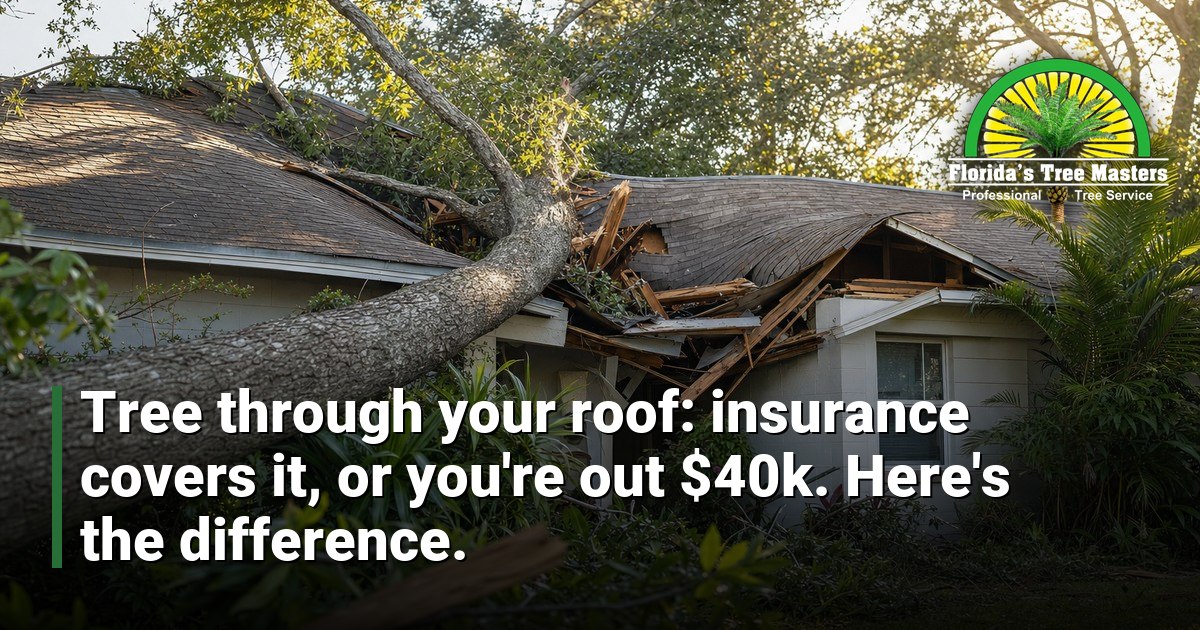
- Proximity to the house. If a large limb, or the whole tree, is positioned directly over the roofline, we treat it as urgent. Insurance claims after the fact cost more than removal upfront.
If you’re not sure what you’re looking at, call us. We’ll come out, take a look, and give you a straight answer. No pressure, no jargon, no charge for the visit.
How We Remove Oak Trees in Northeast Florida
Every job is different, but the process generally follows the same pattern. We start by assessing the tree and the property, what’s below it, what’s around it, how we’re going to get equipment in and debris out. Access matters a lot. A tree in an open backyard with a wide gate is a different job from one boxed in by a fence, a pool, and a neighbor’s shed.
Equipment We Bring
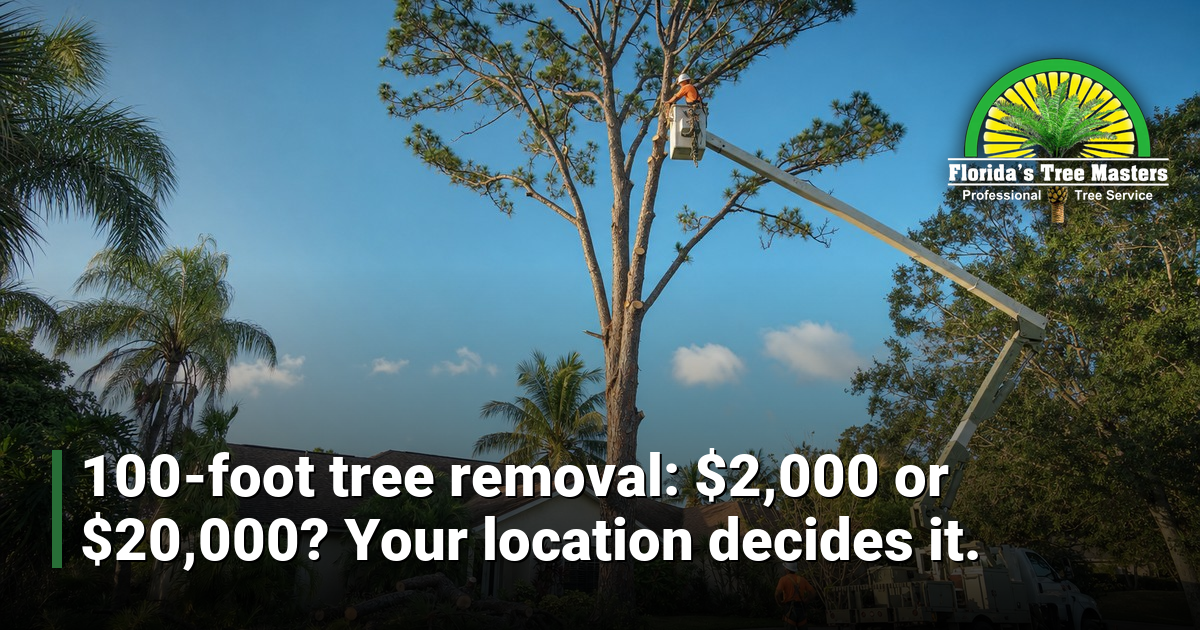
For most oak removals, we’re running a bucket truck for the upper canopy work and a Bobcat skid steer to move logs and debris on the ground. The Bobcat can get into tighter spots than most people expect, and it saves a lot of manual labor, which keeps the job efficient and the cost reasonable. Once the tree is down, we bring in our Vermeer stump grinder to take the stump below grade so you can sod, plant, or build over it.
Our Ram trucks haul the debris off your property. We don’t leave brush piles at the curb unless you specifically want chips for a garden. Standard practice is to leave the yard clean.
Permits in Florida
Some counties and municipalities require a permit to remove a live oak, especially if the tree meets a certain trunk diameter. This varies by location. In Volusia County, Seminole County, and several municipalities in Duval and Orange County, there are canopy protection rules that apply. We handle the permit process on our end. We know which jurisdictions require what. You don’t need to figure that out yourself, that’s our job.
What Oak Tree Removal Costs in Florida
This is the question everyone wants answered first, and we get it. Pricing on oak removal is wide because the trees are so different in size, condition, and location. A 30-foot water oak in an open side yard is not the same job as an 80-foot live oak overhanging a pool screen and a screened enclosure.
Generally speaking, oak tree removal in Florida runs somewhere between $600 and $3,500 for most residential jobs. Smaller trees on the lower end. Large, complex removals with rigging, crane work, or difficult access on the higher end. Every tree is different, final price depends on size, location, access, and disposal. We won’t give you a real number until we’ve actually seen the tree.
What’s included in our price: the removal itself, all debris hauled off (brush, logs, wood chunks), and a clean yard when we leave. If you want the stump ground, that’s typically quoted separately, usually in the $150 to $400 range depending on the size of the stump and root flare.
We’re licensed, insured, and ISA-trained. If another crew gives you a lower number and they can’t hand you proof of insurance before the job starts, that’s a risk you’re taking on yourself. A tree that falls on a house during removal, if the crew isn’t properly covered, lands on your homeowner’s policy. We provide full insurance documentation on every job before we start.
Call us at (386) 320-3169 for a free quote. We serve Volusia County and seven other counties across northeast Florida, Flagler, Seminole, Orange, St. Johns, Duval, Clay, and Putnam.
Storm Season and Oak Trees: Don’t Wait
Florida’s storm season runs June 1 through November 30. If you have an oak that you’ve been watching and wondering about, don’t wait until a named storm is 48 hours out to make the call. Every tree service in northeast Florida, including us, gets slammed before and after major storms. Lead times go from days to weeks overnight.
If a limb is hanging over your roof right now, that’s not a situation to monitor. A 500-pound oak limb hitting a roof is a roof replacement. It can be a lot worse than that. Call us before the season heats up and we can get out there, assess the situation, and take care of it while scheduling is still manageable.
We run a 24/7 emergency line for situations that can’t wait, a tree on a car, a tree on a house, a blocked driveway after a storm. Day or night, weekends, holidays. We answer. If you’re dealing with an active emergency, call us immediately at (386) 320-3169.
Florida’s Tree Masters has been handling oak removals across northeast Florida since 2018. We know these trees, we know this soil, and we know what storm damage looks like before it becomes a real disaster. If you’ve got an oak that’s giving you trouble, we’ll come out and take a look. The visit and the quote are free. The cleanup is included. And we’ll give you a straight answer on whether the tree needs to come down or just needs some work.
Ready to get a quote? Call (386) 320-3169 or reach out through our website. We’ll get back to you fast and get someone out to your property to take a look at the tree, no obligation, no runaround.