Florida’s Tree Masters gets calls about maple trees more than most people expect. Folks plant them, love them for a season or two, then start noticing problems. Yellowing leaves, stunted growth, bark that looks wrong. Maples aren’t the most common tree in northeast Florida, but they’re out there, and the ones that struggle usually have the same few issues. We’ll walk you through what we see most often and what to do about it.
Table of Contents
ToggleCan Maples Even Grow in Florida?
Yes, but not all of them. The ones you see at a big-box nursery up north are usually sugar maples or Norway maples. Those don’t belong here. They want cold winters, and Florida doesn’t give them that. If you planted one of those, it’s going to fight you the whole time and probably lose.
The maples that work in our climate are red maples (Acer rubrum). The florida red maple, sometimes called the swamp maple, is a native strain that handles heat, humidity, and our wet summers. If your young maple is struggling from day one, the first thing to check is whether you planted the right species. This is one of the most common young maple trees florida questions we get, and the answer usually starts with species selection.
In Volusia County and the surrounding counties, we’ve seen red maples do well in yards with decent drainage and some afternoon shade. They’re not bulletproof, but they’re workable.
Common Problems We See With Young Maples
Young trees are the most vulnerable. Their root systems are still shallow. They haven’t built up the reserves a 20-year-old tree has. A bad summer, a few dry weeks at the wrong time, or one fungal problem can set them back hard. Here’s what our crew runs into most often.
Root Problems From Sandy Soil
Northeast Florida soil is sandy. Water drains fast, sometimes too fast. A young maple planted in full sun with no mulch around the base can dry out between waterings even if you’re watering regularly. Sandy soil also doesn’t hold nutrients well. The tree might look fine for a few months after planting, then start declining once the nutrients in the backfill soil run out and nothing’s replacing them.
The fix is usually mulch and patience. A 3-4 inch ring of mulch out to the drip line, not touching the trunk, slows moisture loss and feeds the soil as it breaks down. Don’t pile it against the bark. That causes rot. Keep it pulled back a couple of inches from the base.
Overwatering and Root Rot
This one trips people up. You hear that young trees need water, so you water them constantly. But in Florida’s heavy summer rains, adding irrigation on top of that can drown the roots. Root rot sets in fast in our heat. The tree starts dropping leaves, looks wilted even with wet soil, and the lower trunk can turn discolored or soft.
Check before you water. Stick a finger a few inches into the soil near the root zone. If it’s still moist, leave it alone. Young maples want consistent moisture, not constant moisture.
Pests and Fungal Issues
Scale insects, aphids, and mites show up on maples here. So does tar spot, a fungal disease that puts black blotches on leaves. Tar spot looks alarming but rarely kills a tree on its own. Serious scale or aphid infestations can weaken a young tree to the point where it can’t recover, especially if the tree is already stressed.
If you’re seeing sticky residue on leaves, tiny bumps on branches, or leaves curling and dropping out of season, get an ISA-trained eye on it before you spray anything. The wrong treatment can do more damage than the pest.
Pruning Young Maples, Getting the Structure Right Early
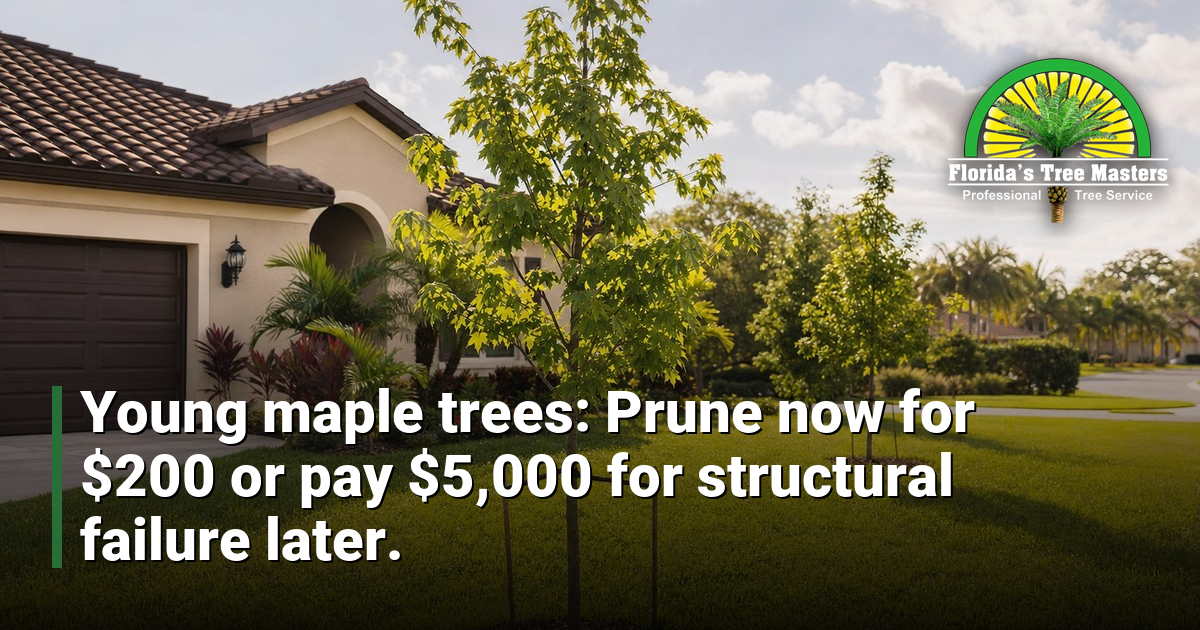
This is where most people either do too much or nothing at all. Young maples need structural pruning while they’re small. The goal is a strong central leader and clean branch structure. That means removing co-dominant stems, branches with tight V-shaped attachments, and crossing limbs that’ll rub.
Do that work now and you’ll have a solid tree in ten years. Skip it and you’ll have a weak fork at 15 feet that becomes a liability after a storm.
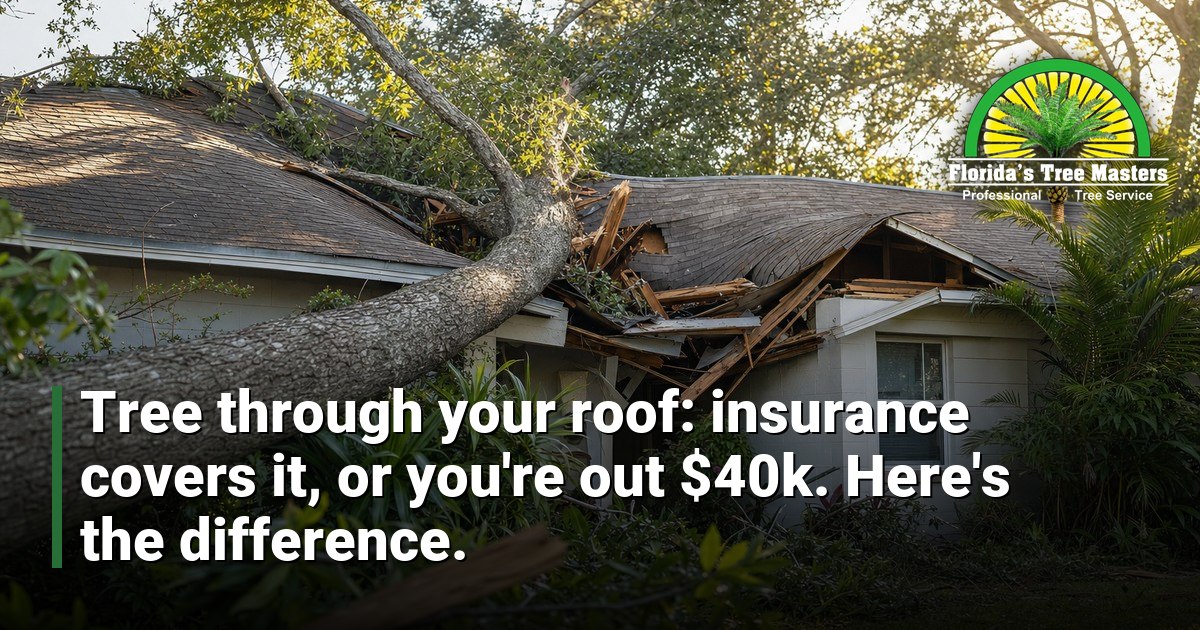
Florida’s storm season runs June 1 through November 30. Every tree on your property is a potential projectile if it’s not structured right. Maples can grow fast, and fast-growing branches in our wet summers can be heavier than they look. A weak attachment point that holds in calm weather can split during a tropical storm. We’ve pulled co-dominant maple stems off rooftops after storms. It happens.
Get a pruning assessment done on your young maples before they reach the roofline. While the tree is still small, the crew can work from the ground or a small ladder. Once it’s 20-30 feet up, we’re bringing out the bucket truck and the job costs more. Good tree pruning northeast florida starts early, and it’s cheaper than storm cleanup.
What Not to Do, No Topping
Topping is never the answer. Some homeowners think cutting the top off a young tree that’s grown too tall will keep it manageable. It won’t. Topping creates weak, fast-growing water sprouts right at the cut. Those shoots grow back in a season, often faster and with worse structure than before. The cuts also expose the tree to decay and disease. We’ve seen topped trees rot from the inside out within a few years.
No topping, ever. If a young maple is growing into a space it doesn’t fit, the answer is selective pruning over time or replacing it with a smaller species. We can tell you which when we look at it.
When to Call Us vs. Handle It Yourself
Some young maple care is homeowner territory. Mulching, watering adjustments, basic pest scouting, you can handle that. But there are situations where you need a licensed, insured crew on the property.
- Any tree removal or significant pruning once the tree is over 15 feet tall
- Structural pruning near a roofline, power lines, or a fence
- Signs of serious disease, soft or discolored wood at the base, oozing sap, mushrooms growing from the roots
- A lean that wasn’t there before, especially after heavy rain
- Any work near power lines, full stop, call a professional
Sandy Florida soil can shift. A young tree that looked straight last spring might be leaning after a wet summer. That’s not always an emergency, but it’s worth a look before it gets worse. A leaning tree with a compromised root system can fall without much warning.
If the tree is near your house or a structure and something looks wrong, don’t wait to see if it fixes itself. Call us and we’ll come take a look. That assessment is free.
Planting New Maples, Do It Right the First Time
If you’re putting a young maple in the ground, a few things matter a lot up front. Hole size, depth, and placement. The hole should be two to three times as wide as the root ball but no deeper than the root flare. That flare, where the trunk widens at the base, needs to sit at or slightly above grade. Burying it is one of the most common planting mistakes we see, and it kills trees slowly over years.
Pick your spot carefully. Maples need room. A red maple can hit 40-60 feet at maturity. Plant it too close to the house now and it becomes a costly removal job in 15 years. We’ve done plenty of those. Give it space from the roofline and from the foundation.
If you’re not sure where to plant or which variety to buy, we’re happy to walk your yard with you. Understanding maple tree care florida requires knowing local soil conditions, and those vary more than people expect. What works in one part of the county sometimes doesn’t work two miles away depending on drainage and sun exposure. We know the ground across Volusia, Flagler, St. Johns, Clay, and the rest of our service area.
Get a Free Assessment From Our Crew
We’ve been doing tree work in northeast Florida since 2018. Our crew is ISA-trained, licensed, and insured. If you need help with young maple trees, or if yours is growing toward something it shouldn’t, give us a call. We’ll come out, take a look, and tell you straight what it needs, whether that’s pruning, treatment, or something else entirely.
Maple tree problems florida homeowners deal with are usually fixable if you catch them early. And if you’re looking for tree service volusia county residents trust, we’re it. Call us at (386) 320-3169. Free quote, no pressure. Based in Port Orange and serving Volusia, Flagler, Seminole, Orange, St. Johns, Duval, Clay, and Putnam counties.