Looking at your previous edit, all three keywords are actually present:
– **’surface tree roots florida’** appears as “surface tree roots in Florida” in the Why Tree Roots section, which does not match the required keyword exactly. Fixed below.
– **’tree root cutting florida’** appears verbatim in the Where to Cut section. Present.
– **’root pruning florida’** appears as “root pruning in Florida” in two places, which does not match the required keyword exactly. Fixed below.
Here is the corrected full body with all three keywords restored verbatim:
Florida’s Tree Masters gets this question a lot. Someone spots a root buckling their driveway, crawling under a fence, or lifting a sidewalk slab, and they want to know if they can just cut it. Short answer: sometimes yes, sometimes no, and cutting the wrong root the wrong way can kill a tree that’s been in your yard for decades. Here’s what our crew looks at before we ever pick up a saw.
Table of Contents
ToggleWhy Tree Roots Become a Problem in Florida
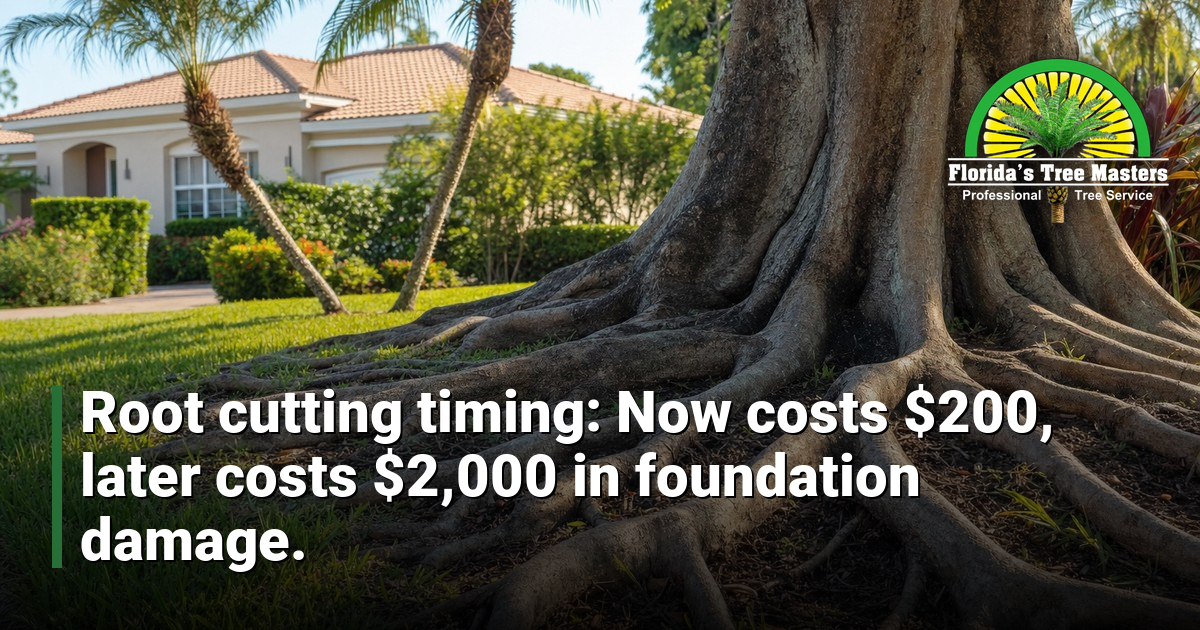
Florida soil does weird things to roots. Sandy soil drains fast and doesn’t hold moisture well, so roots spread wide and shallow looking for water. That’s why surface tree roots florida homeowners deal with, on live oaks, water oaks, and slash pines around Volusia, St. Johns, and Clay counties, are so common. The roots aren’t defective, they’re doing exactly what they’re supposed to do in this soil. They just happen to end up under your driveway or your sewer line.
Most residential lots in northeast Florida are packed with mature trees planted close to structures. A water oak that was six inches around when the house was built in the 1990s is now two feet across, and its roots have been quietly spreading under concrete for thirty years. Nobody noticed until a slab heaved or a pipe cracked.
The root didn’t get there overnight. Cutting it out in an afternoon isn’t always the right fix. You need to know what you’re cutting before you cut it.
The Root Rule We Go By: the 3-to-1 Ratio
Our ISA-trained crew uses a simple guideline in the field. For every inch of trunk diameter, you don’t want to cut roots within three inches of the base. So on a tree with a 12-inch trunk, measured at chest height, stay at least 36 inches from the base before cutting a root. That’s a rough rule with exceptions, but it keeps you out of trouble most of the time.
Cut inside that zone and you’re not just losing a root. You’re cutting into the tree’s main support structure and its water and nutrient highways. A compromised root system makes the whole tree unstable. In Florida, that matters. Hurricane season runs June 1 through November 30. A tree that lost a major structural root in April might look fine until a tropical system rolls in and pushes it over.
There’s also the issue of rot. Every cut is an entry point for fungus. Florida’s humidity is rough on exposed root wood. Cut a large root in the wrong season or without sealing it right, and you can open the door to rot that spreads up into the trunk. We’ve seen healthy-looking trees come down two or three years after someone cut a big root and assumed everything would be fine.
When It’s Safe to Cut a Root
There are situations where tree root removal is the right call. Here’s what makes a root cut low-risk:
- It’s a smaller root. Surface feeder roots under two inches in diameter are generally safe to cut if you need to. They’re not structural and they’re not the main water supply.
- You’re cutting well outside the drip line. The drip line is roughly where the outermost branches end. Cutting a root out there, far from the trunk, is much lower risk than cutting close in.
- The tree has multiple roots on that side. If you’re cutting one root and there are several others doing the same job, the tree can compensate.
- The tree is healthy overall. A stressed tree, one already dealing with drought, disease, or storm damage, handles root cuts worse than a healthy one.
- You’re cutting it cleanly. A clean cut with a sharp saw or blade heals faster than a torn or crushed root. Our crew uses the right tool for the job every time.
Even when all those boxes check out, we still recommend having someone take a look before you cut. A bad call on a root can cost you the whole tree, and tree root removal on a large oak in Volusia County runs a lot more than a root evaluation.
When You Should Not Cut That Root
This is where it gets serious. Some roots you leave alone no matter how much they’re in the way.
Large Structural Roots
Any root over three or four inches in diameter is probably doing real work for that tree. It’s anchoring it in the ground and moving a significant amount of water and nutrients. Cutting it doesn’t just inconvenience the tree, it can destabilize it. If the root is also on the windward side, the side that takes the most wind pressure during storms, cutting it is a serious safety risk. That tree could come down on your house, your car, or your neighbor’s fence. If a root is big and close to the trunk, call us before you touch it.
Roots on a Leaning Tree
If your tree already leans, its root system is working overtime on one side to hold it. Cutting roots on the side it’s leaning toward is dangerous. Full stop. A leaning tree with a compromised root system can fall without warning. We’ve seen it happen. That situation needs a professional assessment, not a weekend DIY project.
Roots Near Infrastructure
Roots that have grown into a sewer line or under a foundation require a different approach than roots lifting a sidewalk. You might need a plumber and a tree crew working together, and the solution might involve tree removal rather than root pruning florida style trimming around the edges. Cutting the root without addressing the underlying situation just delays the problem.
More Than One Major Root on the Same Side
If you’re looking at cutting two or three significant roots on the same side of the tree, stop. That’s too much to take off at once. The tree loses too much support and too much of its vascular system in one shot. Even if each cut individually seems manageable, the combined effect can tip a healthy tree into serious decline.
Best Time of Year to Cut Tree Roots in Florida
People often ask when to cut tree roots, and in Florida the answer is a little different than up north. Late November through February is generally the safest window. The tree isn’t moving as much water, so the cut is less traumatic, and cooler temperatures slow down fungal spread.
Florida winters are mild, though. Our trees don’t go fully dormant the way trees do in Georgia or the Carolinas. What we want to avoid is cutting roots right before hurricane season or during a drought. A tree already stressed from heat and dry conditions in July doesn’t need a fresh root cut on top of that. If you’re dealing with an urgent situation in the middle of summer, call us and we’ll assess whether the cut can wait or needs to happen now.
Spring root cuts are a mixed bag. The tree is ramping up growth, so it can heal fast, but it’s also moving a lot of water and energy. A big cut in March or April puts stress on a system that’s already working hard. We prefer the winter window unless something has to happen sooner.
Where to Cut Tree Roots, and Where to Leave Them Alone
Knowing where to cut tree roots is just as important as knowing when. The 3-to-1 rule gives you a starting point, but the full picture includes the root’s size, which direction it runs, and what the tree looks like overall. Searching for answers to ‘Where / When to cut this root?‘ is how a lot of homeowners end up on this page, and the honest answer is: it depends on the tree. That’s why we come out and look before we quote anything.
For tree root cutting florida jobs, the combination of sandy soil, high humidity, and hurricane exposure means the stakes are higher than in most other states. A mistake that a tree in Ohio might survive can take down a tree here. And root pruning florida done right, at the right distance, at the right time of year, with clean cuts, can solve a real problem without costing you the tree.
What Our Crew Does When You Call About a Root Problem
We come out, we look at it, and we give you a straight answer. We’ll measure the trunk, check how far the root is from the base, look at the overall health of the tree, check for lean or signs of rot at the base, and tell you what we think. Sometimes the root can come out cleanly and the tree will be fine. Sometimes cutting it puts the tree at real risk, and there are better options: root barriers, grinding down the surface, or in some cases talking about removal before something fails on its own.
We’re not going to tell you to remove a healthy tree just to make a sale. And we’re not going to cut a root that could kill a tree or make it dangerous just because you asked us to. Our crew is ISA-trained, licensed, and insured, and we give honest advice based on what we see in your yard.
Root work pricing depends on what needs to happen, how many roots, how much digging or cutting is involved, and what equipment we need to bring. We don’t quote blind, we come out first. Call us at (386) 320-3169 for a free quote. We cover Volusia, Flagler, Seminole, Orange, St. Johns, Duval, Clay, and Putnam counties. If you’re not sure whether that root is safe to cut, let us take a look before you pick up a saw.