Florida’s Tree Masters gets this question a lot. Homeowners assume that if a tree is on their land, they can do whatever they want with it. Sometimes that’s true. Sometimes you’ll get a stop-work order, a fine, or worse, a worker’s comp claim filed against your homeowner’s policy because an uninsured crew got hurt in your yard. Here’s the straight answer, broken down so you know exactly where you stand before you pick up a chainsaw or call anyone.
Table of Contents
ToggleThe Short Answer: It Depends on Your Municipality
Florida has no single statewide rule covering tree removal laws florida homeowners have to follow. What controls your situation is the local ordinance, your city’s code, your county’s land development regulations, or sometimes your HOA’s rules on top of all that. Some counties in our service area are strict. Others are more relaxed. And the rules can change based on the species, the diameter of the trunk, and where the tree sits on your lot.
In general, unincorporated areas of counties like Putnam or Clay tend to have fewer restrictions than cities like DeLand or Sanford. But don’t assume. We’ve seen homeowners in Volusia County take down a protected oak and get hit with a mitigation requirement, meaning they had to replant multiple trees to satisfy code. That’s a headache you don’t want.
Which Trees Are Usually Protected in Florida?
Most protected-tree lists at the county level focus on specimen trees, trees above a certain trunk diameter, measured at breast height (DBH). That’s 4.5 feet off the ground. Common thresholds are 8-inch DBH or 12-inch DBH, depending on the jurisdiction. Cross that line and you generally need a permit before anything gets cut.
Species that frequently show up on protected lists across our 8-county area:
- Live oaks, the most common protected species in northeast Florida. Heavy canopy, wide spread, and they’ve been around long enough to qualify as specimen trees on most lots.
- Water oaks, often protected, but also one of the first trees to go soft from rot. We inspect these constantly.
- Southern magnolia, protected in several municipalities.
- Bald cypress, protected near wetlands. Flagler and Putnam counties have a lot of these near flood zones.
- Sabal palm, Florida’s state tree. Some municipalities protect it specifically.
Pines are sometimes on the list, sometimes not. Invasive species like Brazilian pepper or Chinese tallow are almost never protected, and some codes require their removal. If you’re unsure about the tree in your yard, call your local code enforcement office or call us. We’ll take a look at no charge.
Do I Need a Permit to Remove a Tree in Florida?
A lot of homeowners ask us, do I need a permit to remove a tree in florida? In many cases, yes. If the tree meets the size threshold and isn’t dead, diseased, or an immediate hazard, most cities and counties require a florida tree removal permit. The process usually involves:
- Submitting a form to your city or county planning or code department
- Describing the tree species, size, and reason for removal
- Sometimes paying a fee (ranges vary widely)
- Sometimes hiring a certified arborist to document the tree’s condition
There are common exemptions. Imminent danger is the big one. If a tree is cracked, leaning toward a structure, or visibly dying, most jurisdictions allow removal without waiting on a permit, especially after a storm. Document the condition with photos before you cut anything. That documentation protects you if anyone questions the work later.
Our crew is ISA-trained, which means we can document tree condition professionally. That matters when your permit application needs to show cause or when an insurance claim is involved. Tree removal without the right paperwork can cost you far more than the job itself.
What Happens If You Cut Without a Permit?
It’s not just a slap on the wrist. Municipalities in Florida can issue fines based on the appraised value of the tree, which for a large live oak can run into the thousands. Some require mitigation: you remove one protected tree, you plant two or three approved replacement trees at your expense. Flagler County and parts of Volusia have enforced this. It’s real.
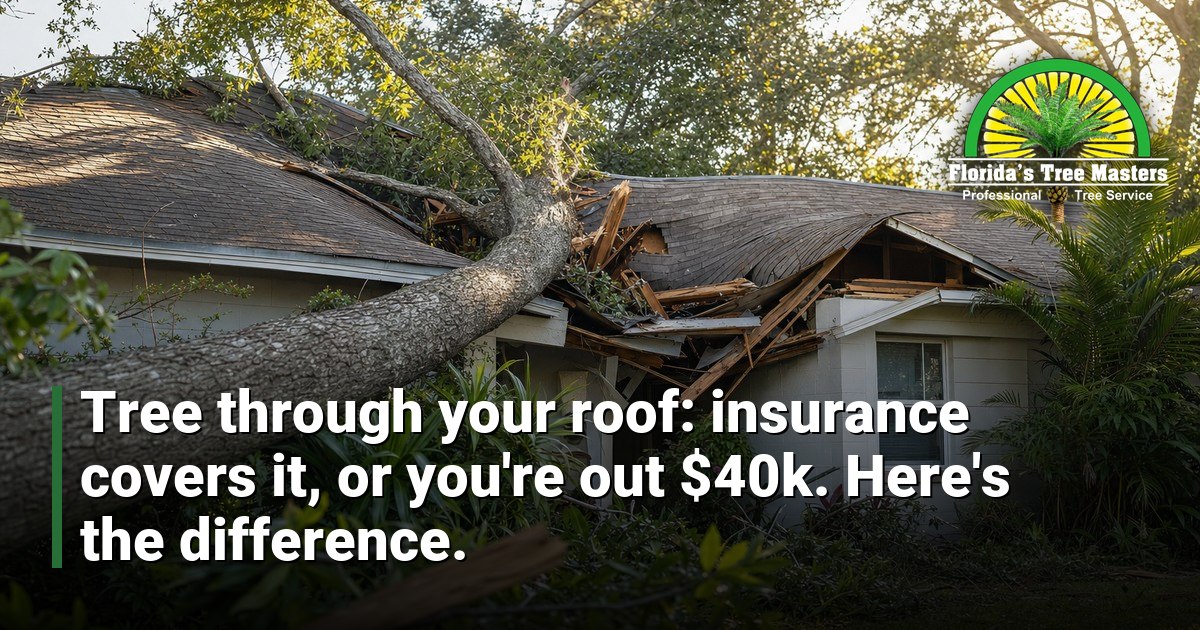
Beyond the fine, if the tree falls on a neighbor’s property during an unpermitted removal job, or if someone gets hurt, your homeowner’s insurance may not cover the damage. Most policies have language about unpermitted work. That’s a liability hole most people don’t think about until they’re staring at a claim denial.
This is also why hiring an uninsured crew is a bad move. If their guy gets hurt on your property and they don’t carry workers’ compensation, that claim can come to you. We carry full liability insurance and workers’ comp. We pull permits when permits are required. Every job, no shortcuts.
Can I Cut Down Trees on My Own Property in Florida?
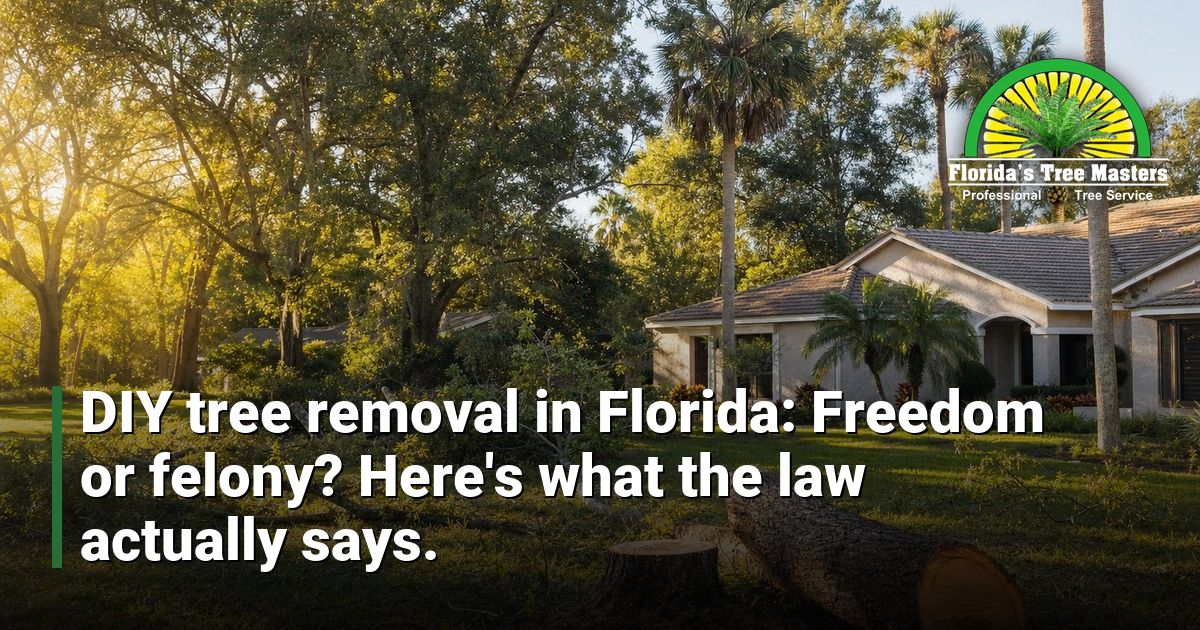
That’s one of the most common questions we hear: Can I cut down trees on my own property in Florida? Legally, in most Florida jurisdictions, homeowners can cut down trees on own property florida without a contractor’s license, as long as the permit requirement is satisfied and you’re doing the work yourself, not hiring unlicensed labor. That’s the legal side.
The practical side is a different conversation.
When DIY Makes Sense
Small trees, well away from any structure, with a clear drop zone and no power lines nearby. We’re talking about a 15-foot tree in the middle of a wide open yard. If that’s your situation and you’re comfortable with a chainsaw and you’ve got someone spotting for you, you can probably handle it. Rent a chainsaw, watch some proper felling technique videos, and take your time. The risk is manageable if the variables are right.
When DIY Is a Mistake
Anything near a house, a fence, a power line, or a neighbor’s property. Any tree that’s leaning the wrong direction. Any tree with rot, dead wood, or a cracked trunk, those can split unpredictably. Palms are especially deceiving. They’re flexible and they look benign, but a large sabal palm canopy can weigh several hundred pounds and move in ways that surprise even experienced guys.
We’ve been called out after DIY jobs went wrong. The tree landed on the roof. The chainsaw kicked back. The cut went fine but the stump sat there for months until someone finally called about the Vermeer stump grinder. We say it because it happens more than people think, and the cost of fixing a bad drop usually exceeds what the original removal quote would have been.
If you’re in Volusia County or anywhere else in our 8-county area and you’re not sure if your tree is a DIY situation or a call-a-crew situation, we’ll come out and tell you honestly. If it’s small and simple and you want to handle it yourself, we’ll say so. We’re not going to oversell a job.
Storm Damage Changes the Rules
Florida storm season runs June 1 through November 30. After a major storm, or even a line of strong thunderstorms, trees come down in ways that create immediate danger. A cracked trunk can fall without warning. A tree leaning against your roofline needs to come off before the next rain soaks the wood and adds more weight.
Most Florida municipalities have emergency exemptions that allow removal of hazardous trees without waiting on a permit, but you should still document conditions before the work starts. Take photos, get a professional assessment if time allows, and keep records. If the tree is on your house or blocking emergency access, don’t wait. Call us at any hour.
Our crew runs a 24/7 emergency line. After a storm, we’re out with the bucket truck and the Bobcat skid steer clearing what needs clearing. We’ve been doing this since 2018 across Volusia, Flagler, St. Johns, Duval, Clay, Putnam, Seminole, and Orange counties. We know how to work fast without cutting corners on safety or cleanup.
Florida Tree Ordinance: Every City Is Different
One thing that trips homeowners up is assuming one city’s rules match the next city over. The florida tree ordinance framework is set locally, not by the state. So the rules in Port Orange are not the same as the rules in Daytona Beach, and tree removal volusia county rules differ from what applies in St. Johns or Flagler. If you’re doing work in Volusia specifically, check with Volusia County’s Growth and Resource Management department before you start. Or call us. We know the local codes and we’ll point you in the right direction.
Get a Free Quote Before You Decide
If you’ve got a tree you’re thinking about removing, protected or not, permitted or not, DIY or hire-it-out, the smartest first step is a free on-site look. We’ll tell you what the permit situation looks like, whether the tree is a real risk, and what removal would run. Most jobs in our area land somewhere between $300 and $2,500 depending on size, species, access, and whether stump grinding is included. Every tree is different, so we quote on-site, not over the phone.
Call Florida’s Tree Masters at (386) 320-3169. We’re based in Port Orange, we know the local codes across all 8 counties, and we’ll give you a straight answer, not a sales pitch.